Arvind opens a Rs 150 crore garment plant in Varanasi to sew clothes for global brands
Version 1 of 1 saved 26 Oct 2026, 9:37 am IST · Chain line 243
As it was first published
Arvind opens a Rs 150 crore garment plant in Varanasi to sew clothes for global brands
The denim maker's first factory in Uttar Pradesh will turn its own fabric into knitwear, with over 1,000 people, mostly women, expected to work there.
Picture a T-shirt in a shop in London. The label says "Made in India". Soon, that shirt could have been sewn in a brand new factory just outside Varanasi.
On Sunday, 25 October 2026, Prime Minister Narendra Modi inaugurated a new garment plant of Arvind Limited at Khochwan in Mirzamurad, Varanasi. The plant cost about Rs 150 crore and is expected to employ over 1,000 people, mostly women.
Here is what the plant is, why a cloth company wants to sew clothes, and why so many global brands want their clothes made in India.
First, who is Arvind?
If you own a pair of jeans, there is a fair chance the cloth came from Arvind. The Ahmedabad company was founded in 1931 and is known as the largest maker of denim (the thick blue cloth used for jeans) in India.
Arvind makes cotton shirt cloth, denim and knitted fabric. Knitted fabric is the stretchy kind used for T-shirts and track pants, made by looping yarn, the way a sweater is knitted by hand.
The family behind it goes back even further. The Lalbhai Group, which runs Arvind, was set up in 1897, according to the company's filing with the National Stock Exchange.
What is inside the new plant?
The numbers, from the company's own announcement as reported by The Times of India:
- Money spent: about Rs 150 crore.
- Land: 5.5 acres, with about 65,000 square feet of built-up space. That is a little smaller than a football field, all under one roof.
- What it makes: everyday knitwear, using automated sewing machines.
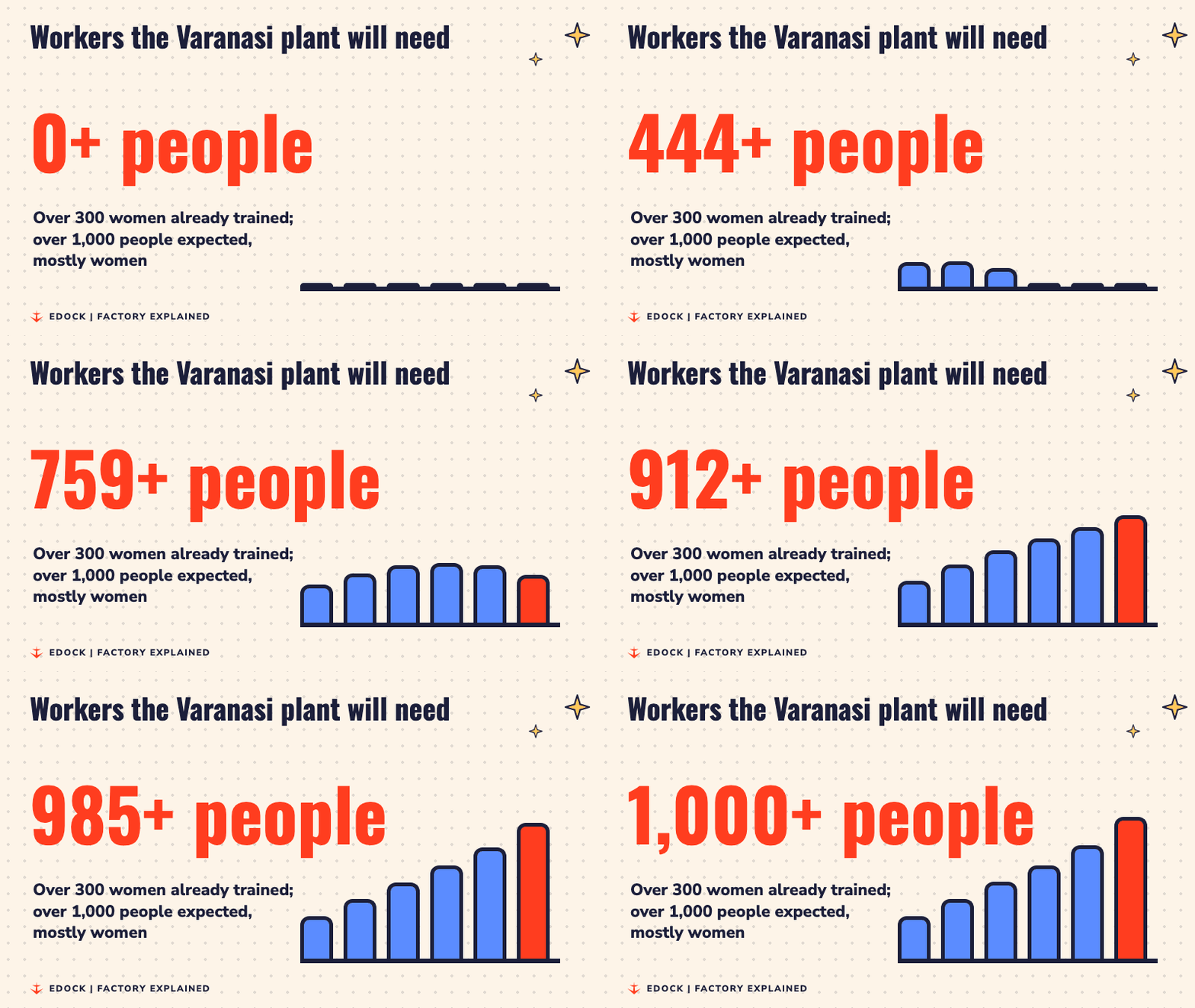
- People: over 1,000 expected, mostly women.
- Revenue potential: Rs 250 crore.
This is Arvind's first factory in Uttar Pradesh. It is also a greenfield plant. Greenfield means it was built on empty land from scratch, like building a new house on an empty plot instead of fixing up an old one.
Hindustan Times reported that the unit will make items such as sportswear and undergarments for several big multinational brands. The Uttar Pradesh government said the plant will grow in two phases.
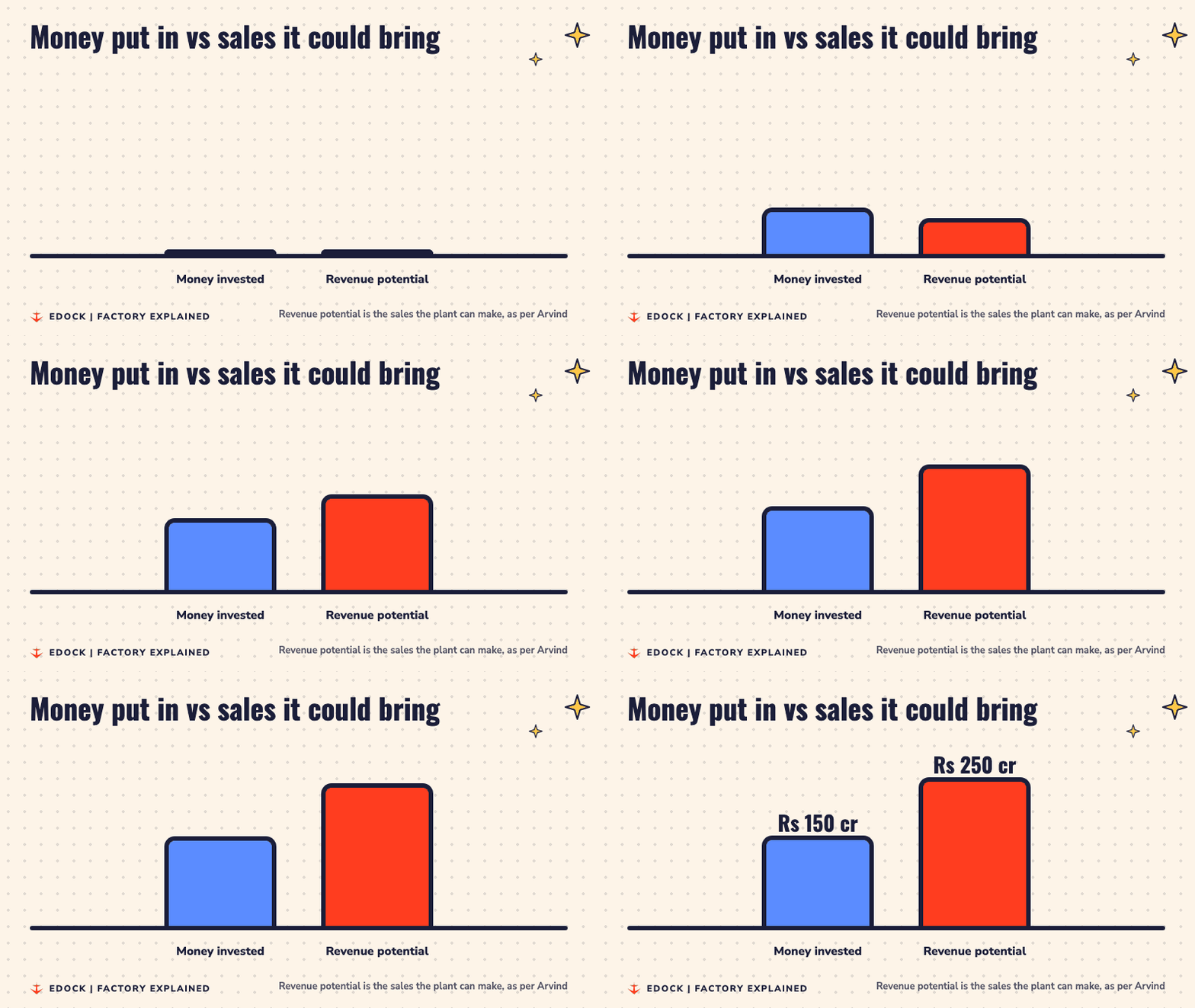
What does "revenue potential" mean?
Revenue is the total money that comes in from selling things, before any costs are paid. Think of a chai stall that sells 200 cups at Rs 10 each. Its revenue is Rs 2,000, even though milk, sugar and gas cost money too.
Revenue potential is the sales Arvind thinks the plant can bring in once it is working well. It is not profit. Profit is what is left after paying for cloth, power, salaries and everything else.
Why would a cloth maker start sewing clothes?
To understand this, follow one T-shirt from the field to the shop. This chain of steps is called the value chain, because every step adds value (and price) to the product.
- Cotton is picked from a farm.
- Yarn is spun from the cotton, like thin thread.
- Fabric is knitted or woven from the yarn.
- Garments are cut and sewn from the fabric.
- Brands put their label on it and sell it in shops.
Arvind has long been strong at step 3. With this plant, it moves into step 4 as well, turning its own knitted fabric into finished clothes. The company calls this vertical integration.
Here is an easy way to picture vertical integration. Imagine a samosa stall that used to buy ready-made dough from a shop. One day it starts making its own dough in its own kitchen. Now it controls the taste, it does not wait for a supplier, and it keeps the money it used to pay the dough shop.

Why do global brands want clothes made in India?
Big clothing brands do not always own factories. Many of them design the clothes and then pay factories in countries like India to make them. When a factory makes clothes for another company's label, it earns money for every piece it sews.
India has a few things going for it here. Arvind's Vice Chairman Punit Lalbhai said in the filing that India's strong textile value chain and skilled workforce are making it a preferred global manufacturing destination. In simple words: the whole chain, from cotton to finished shirt, can happen inside one country, with plenty of trained hands to do the work.
Trade deals matter too. The filing says the plant will help Arvind reach European and UK markets that opened up after recent Free Trade Agreements. A Free Trade Agreement, or FTA, is a deal where two countries agree to cut the taxes they charge on each other's goods. Lower taxes at the border can make Indian-made shirts cheaper on a shop shelf abroad, which helps them compete.
The official press release before the event also said the plant will serve a global customer base, so clothes made in Varanasi can reach international markets.
Who will work there?
Women are at the centre of this plant. The state government said over 300 women have already been recruited and are being trained at the facility.
The Times of India reported that Arvind has also built dedicated hostels for workers and plans to add more housing as the plant grows. Beyond the plant itself, it expects more local work in supply, transport and services around the factory.
Watch the opening of the plant here:
Why this matters to you
Garment factories need a lot of people, from machine operators to quality checkers, supervisors and planners. For students and first-time workers in eastern Uttar Pradesh, a large factory nearby can mean a paid role without moving to a far-off city.
It also shows how Arvind wants to get more out of the same cloth: instead of selling only fabric, it will also sell the finished clothes made from it. The next time you see "Made in India" on a T-shirt label abroad, it may have travelled this exact path, from cotton to yarn to fabric to a sewing line in Varanasi.
Sources
- Hindustan Times: PM inaugurates Rs 150 crore Arvind Limited plant in Varanasi
- The Times of India: Garment unit opens in Kashi
- Business Upturn: Arvind's new garment facility in Varanasi (based on the NSE filing)
- Moneycontrol: PM to inaugurate garment facility in Varanasi on 25 October
- Wikipedia: Arvind Limited
- Cover photo: Arvind store, RR Nagar, Bengaluru (2026), by Gpkp, CC BY-SA 4.0
