Apple India's yearly sales cross Rs 1 lakh crore as profit jumps 66%
New filings show Apple India earned about Rs 1.04 lakh crore in FY26. Here is where that money came from, where it went, and why exports sit outside it.

Picture every iPhone, MacBook and iPad that Apple sold in India in one year, and add up the bills. The total comes to more than Rs 1 lakh crore. That is the first time Apple's India business has crossed this mark in a single year.
On 20 October 2026, The Economic Times reported the company's filings with the Registrar of Companies, the government office where companies file their yearly accounts. They show that Apple India Pvt Ltd earned about Rs 1.04 lakh crore from sales in FY26, the money year that ended on 31 March 2026. That is up 31% from Rs 79,060 crore a year earlier.
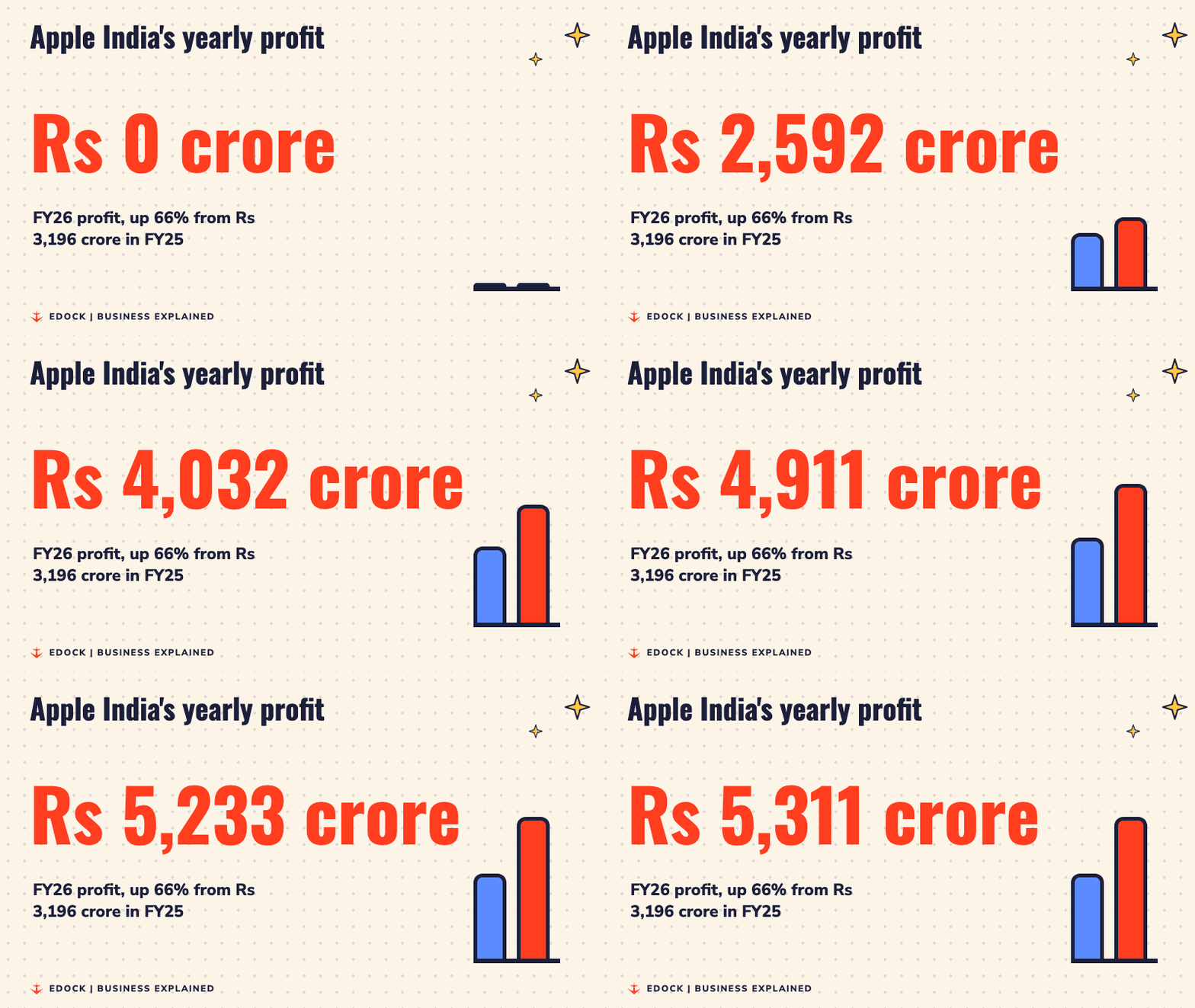
Profit grew even faster. It jumped 66% to Rs 5,311 crore, from Rs 3,196 crore in FY25.
First, two simple words
Think of a samosa stall. You sell 100 samosas at Rs 20 each. The Rs 2,000 you collect is your revenue: all the money that comes in from selling.
But you also paid for potatoes, oil, gas and the cart. Whatever is left after those bills is your profit. So revenue tells you how big the stall is. Profit tells you how much the owner really keeps.
Apple India's revenue grew by 31%. Its profit grew by 66%. When profit grows faster than sales, it usually means each sale is leaving a little more money behind.
Where did the money come from?
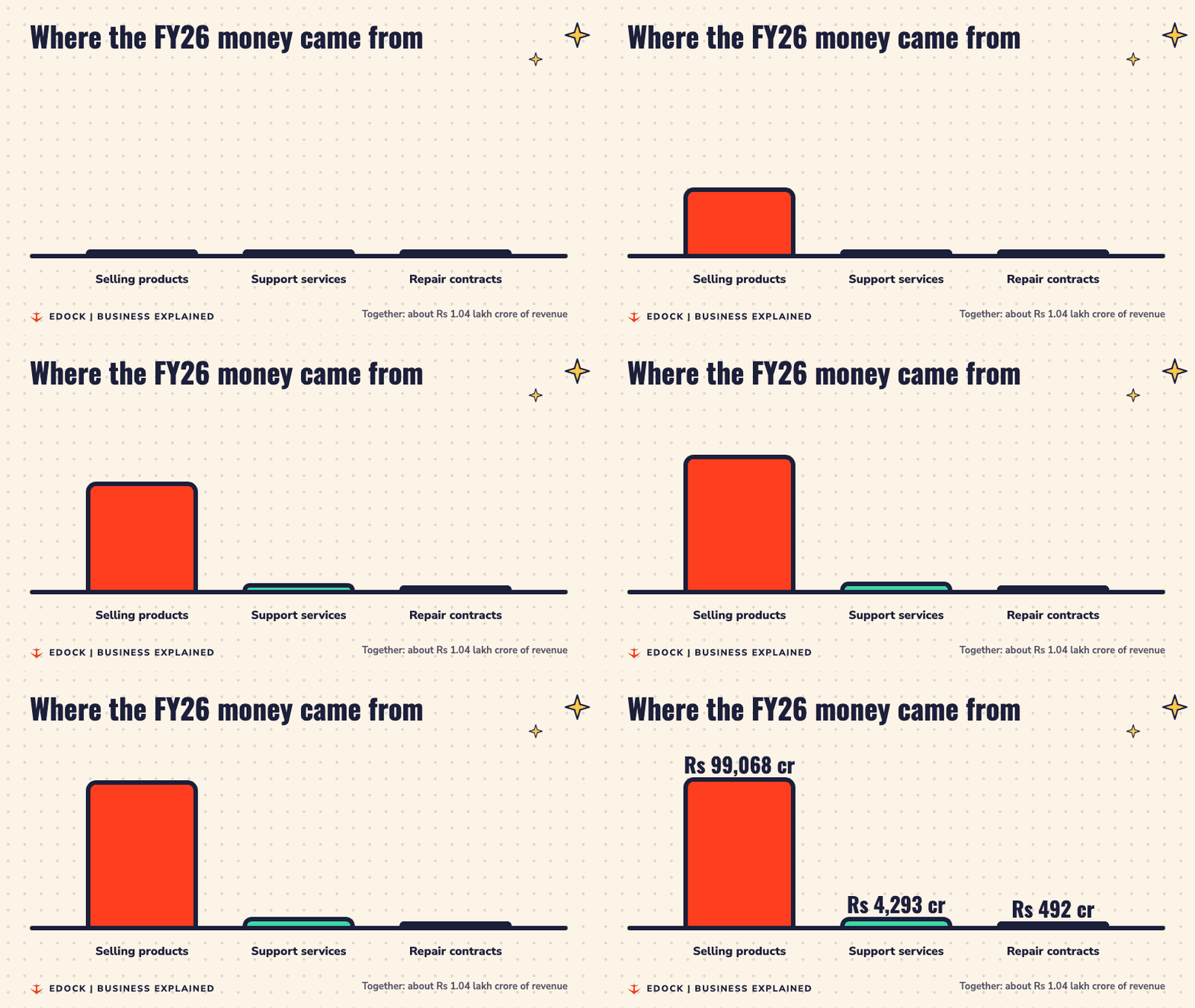
Almost all of it came from selling things. Apple India's revenue from selling products rose almost 33% to Rs 99,068 crore, from Rs 74,680 crore in FY25. This covers iPhones, MacBooks, iPads and other gadgets.
A much smaller part came from help after the sale. Support services, such as AppleCare, brought in Rs 4,292.8 crore, up 7.6%. Repair and maintenance contracts added Rs 492.4 crore.
Why are more Indians buying iPhones?
The filings themselves do not give a reason. The Economic Times said Apple did not explain the jump, and an email to Apple India got no answer by press time.
But a research firm, Counterpoint, told the newspaper what it sees. It said Indians are slowly moving to premium phones, which means costly, top-end phones. It also pointed to more shops in smaller towns and easy financing, which means paying for a phone in small monthly parts, like an EMI.
Counterpoint's numbers tell the same story. India's whole smartphone market grew just 2% by number of phones in FY26. But phones priced above Rs 30,000 grew 12%. And Apple's own phone count grew 24%, up from 11% the year before.
Now compare this with Samsung, Apple's biggest rival in India. Samsung's mobile phone revenue fell 1.4% to Rs 81,472 crore. Samsung India's total revenue was bigger, at Rs 1.12 lakh crore, but that also counts TVs, fridges and other machines.
More shops, and a new way to pay
Apple has also been opening its own stores in India. In February 2026, it opened Apple Borivali, its sixth store in India and its second in Mumbai. The store has more than 70 team members and offers trade in and flexible financing.
Apple India is now going beyond gadgets too. Last month it launched Apple Pay in India with Axis Bank. Shops such as Blinkit, Zomato, Croma and Chaayos already accept it.
Where did the money go?
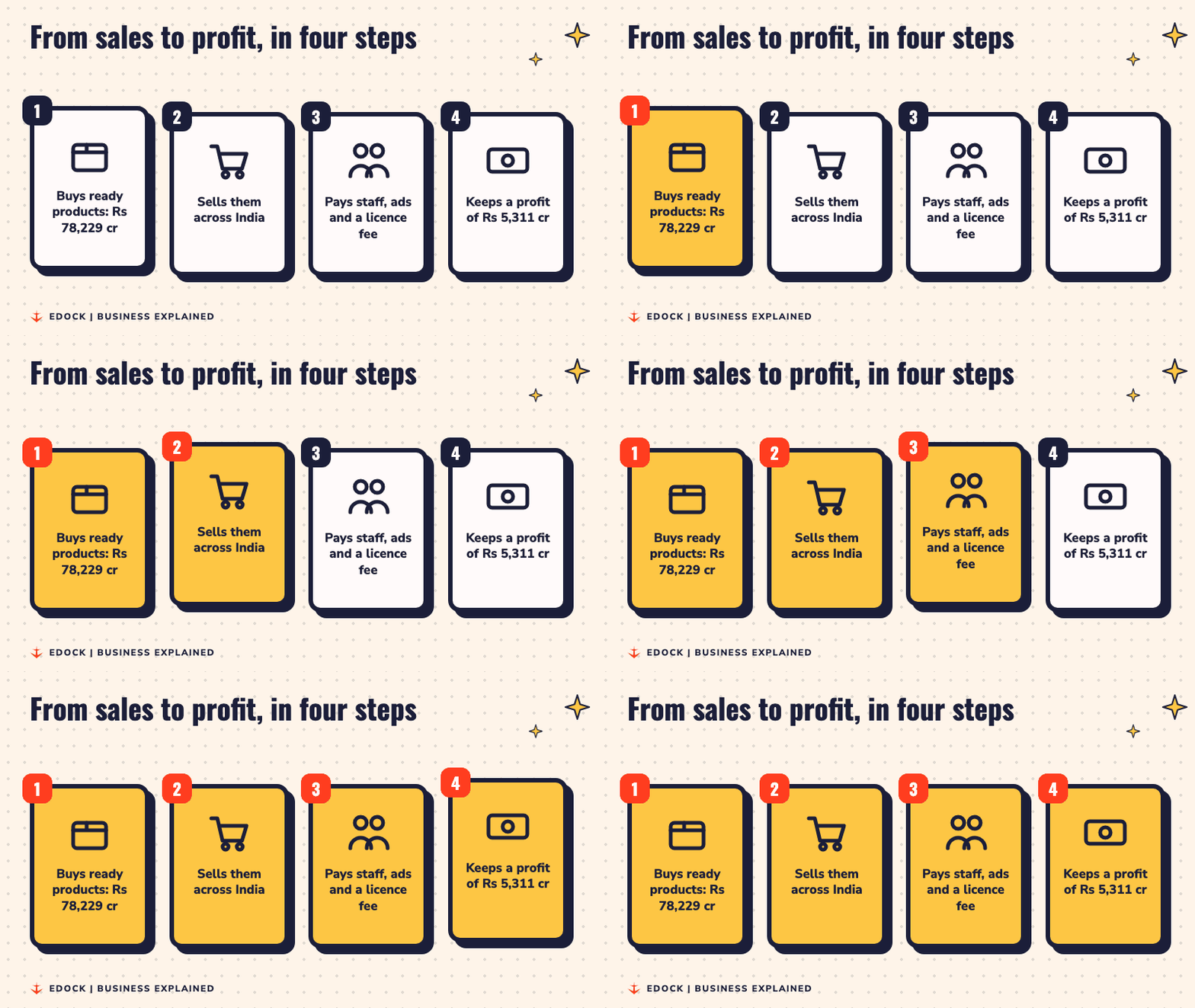
Apple India's total spending grew 28% to Rs 96,224 crore. The biggest bill was buying the ready products it sells. That cost Rs 78,228.7 crore, up 21.6%.
Other big bills:
- Licence fee: Rs 10,373.7 crore, more than double the Rs 4,257.8 crore of FY25. A licence fee is money paid for the right to use something that belongs to someone else.
- Staff: Rs 3,531.3 crore, up 13%, for pay, provident fund and staff welfare.
- Marketing and ads: Rs 1,075.2 crore, up 22.6% from Rs 877.1 crore.
On top of sales, Apple India earned Rs 463 crore from finance income, such as interest, and Rs 291 crore in other income.
The phones India sends abroad are a separate story
Here is a twist. India now makes a lot of iPhones. iPhone exports from India crossed Rs 2 lakh crore in FY26. An export is something made in one country and sold to another.
Business Today reported that this figure was based on the first 11 months of FY26. It said iPhones made up over 75% of India's smartphone exports, which were around Rs 2.6 trillion. For comparison, iPhone exports were only Rs 9,351.6 crore in FY22.
Business Today said Apple's partners Tata and Foxconn were contributing almost equally to these exports. It added that Apple's wider supplier network in India employed about 250,000 people.
So why is Apple India's revenue "only" Rs 1.04 lakh crore? Because the exports are not counted in Apple India's accounts. Contract makers ship the phones, and the sales are recorded by other Apple companies overseas. Think of a tailor who stitches shirts for a big brand. The brand, not the tailor, books the sale when the shirt is sold.
Is there anything to watch out for?
Yes, one thing. Apple has said it expects supply problems in the coming months. There is a shortage of advanced chip making capacity and of memory parts. That could affect how many iPhones, Macs and iPads are available around the world, and India could feel it too if the shortage lasts.
Why this matters to you
For years, the iPhone was seen as a phone only a few people in India could afford. These numbers show a different picture. More Indians are paying more for their phones, often in monthly parts, and Apple is building stores and payment tools around them.
At the same time, India has become a big factory for the same phones the world buys. One country, two stories: a fast growing market at home, and a giant export base for Apple abroad.
Sources
- Inc42: Apple India's FY26 profit jumps 66% YoY, revenue up 31%
- The Economic Times: Apple India in sweet spot as FY26 revenue crosses Rs 1 lakh crore
- Business Today: India's iPhone exports cross Rs 2 trillion in FY26
- Apple Newsroom India: Apple Borivali opens in Mumbai
- Cover photos: Apple Store Taipei Xinyi A13 interior, by MiNe, CC BY 2.0; iPhone disassembled, by Yutaka Tsutano, CC BY 2.0; Electronics PCB circuit board 001, by Jan Helebrant, CC0


You may republish this story under CC BY 4.0: credit Pranav Sharma and link to this page.