Amazon's cloud is almost sold out until 2027, says CEO Andy Jassy
Version 1 of 1 saved 24 Oct 2026, 3:28 pm IST · Chain line 208
As it was first published
Amazon's cloud is almost sold out until 2027, says CEO Andy Jassy
AI companies and big firms have booked most of the computer power Amazon Web Services can rent out for 2027, and a good chunk of 2028 too.
Picture a cycle rental shop so popular that every cycle is already booked for the next two years. Walk in today and the owner says, "Come back in 2028, maybe." That is roughly what happened to Amazon's giant computer rental shop this week.
On Friday, 23 October 2026, Amazon CEO Andy Jassy said that the cloud computing capacity of Amazon Web Services (AWS) is largely sold out through 2027, with big bookings stretching into 2028. The reason is simple: artificial intelligence (AI) is hungry, and it eats computer power.
What exactly did Jassy say?
He said it on a video podcast with Ben Horowitz, a co-founder of the investment firm Andreessen Horowitz, and Erik Torenberg, a partner there. These are his words, as reported by Mint:
"2027 is largely sold out. We always leave a certain amount for on demand and our inference [service] Bedrock, or EC2, but largely sold out all the big chunks. A good chunk of 2028 is sold out."
In plain words: the big blocks of computer power for 2027 are already promised to customers. Amazon keeps a small part free for people who want to rent at the last minute, like a shop that keeps a few cycles for walk-in customers. He also said that cloud capacity for 2026 is already sold out.
Two names in that quote need a quick explanation. EC2 is an AWS service that rents out computers over the internet, so a company can run its apps without owning a single machine. Bedrock gives customers ready-made AI models to build their own AI tools on top of.
First, what is the cloud?
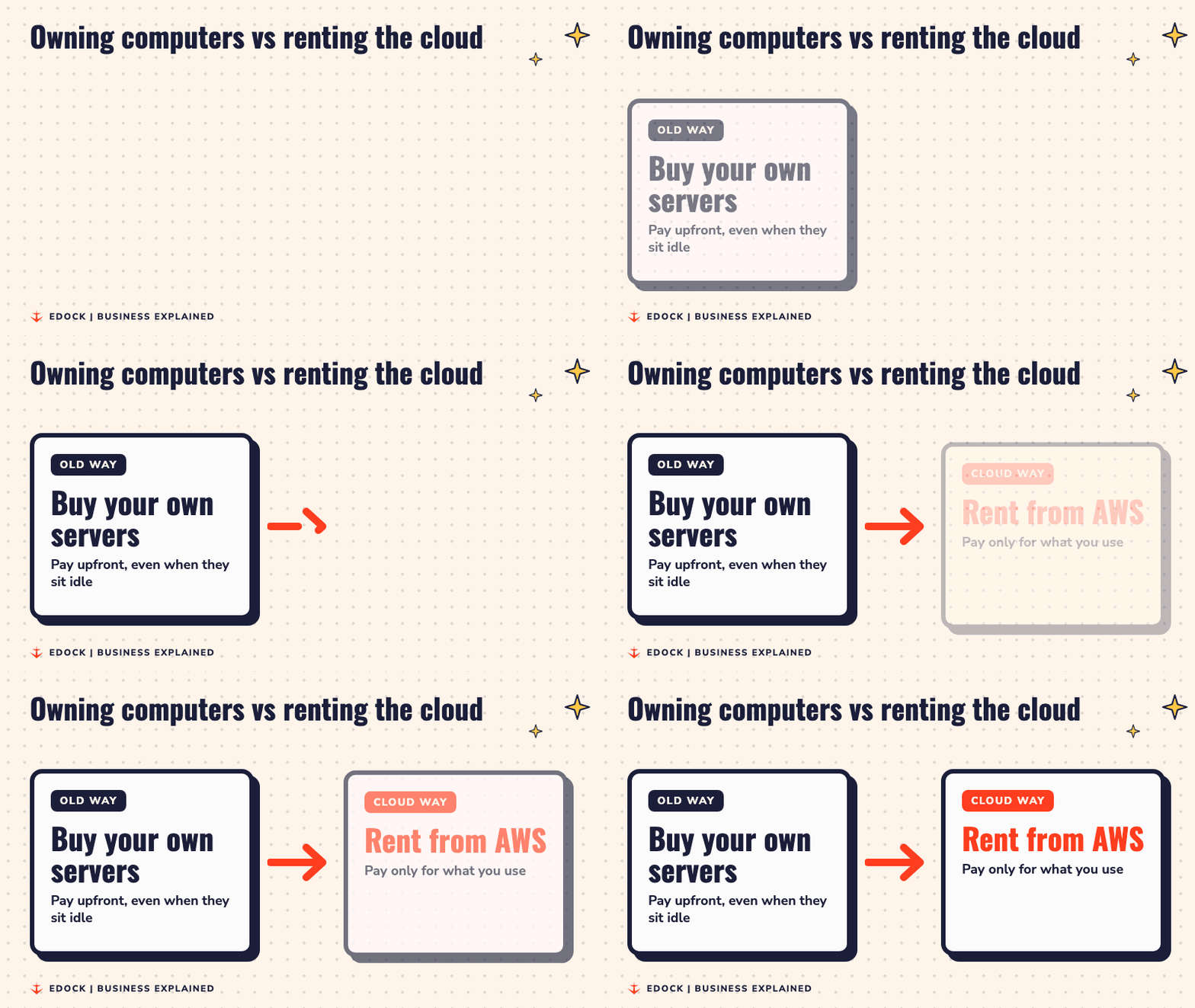
The word sounds fluffy, but the cloud is very real. It is giant buildings full of computers, called data centres. AWS describes cloud computing as getting computer power, storage and databases over the internet, and paying only for what you use, instead of buying and looking after your own machines.
Think of it like this. Buying a cycle means paying a lot upfront, and the cycle sits in the parking lot on days you do not ride. Renting one means you pay only for the hours you ride. A startup with a new app does the same with AWS: it rents computers when users come, and rents fewer when things are quiet.
Why is AI eating so much computer power?
Jassy described AI demand as a "barbell", according to Mint. A barbell is the gym bar with heavy weights on both ends and a thin middle. On one end are AI research companies, which use computer power on a huge scale to build and train their models. On the other end are regular businesses using AI for specific tasks, such as answering customer questions or catching fraud.
The thin middle is everyday business software that has not yet started using AI widely. Jassy expects this middle could one day become the biggest source of demand.
There is a catch. Every time an AI model answers a question, it uses computer power. This is called inference. Jassy said that cost is still too high, and that it is "an order of magnitude too expensive" for AI to be used everywhere. Mint explained that this means costs need to fall roughly tenfold. Imagine if every chat with an AI helper cost as much as a full meal. People would use it less. If it cost as much as a cutting chai, they would use it all day.
How much is Amazon spending?
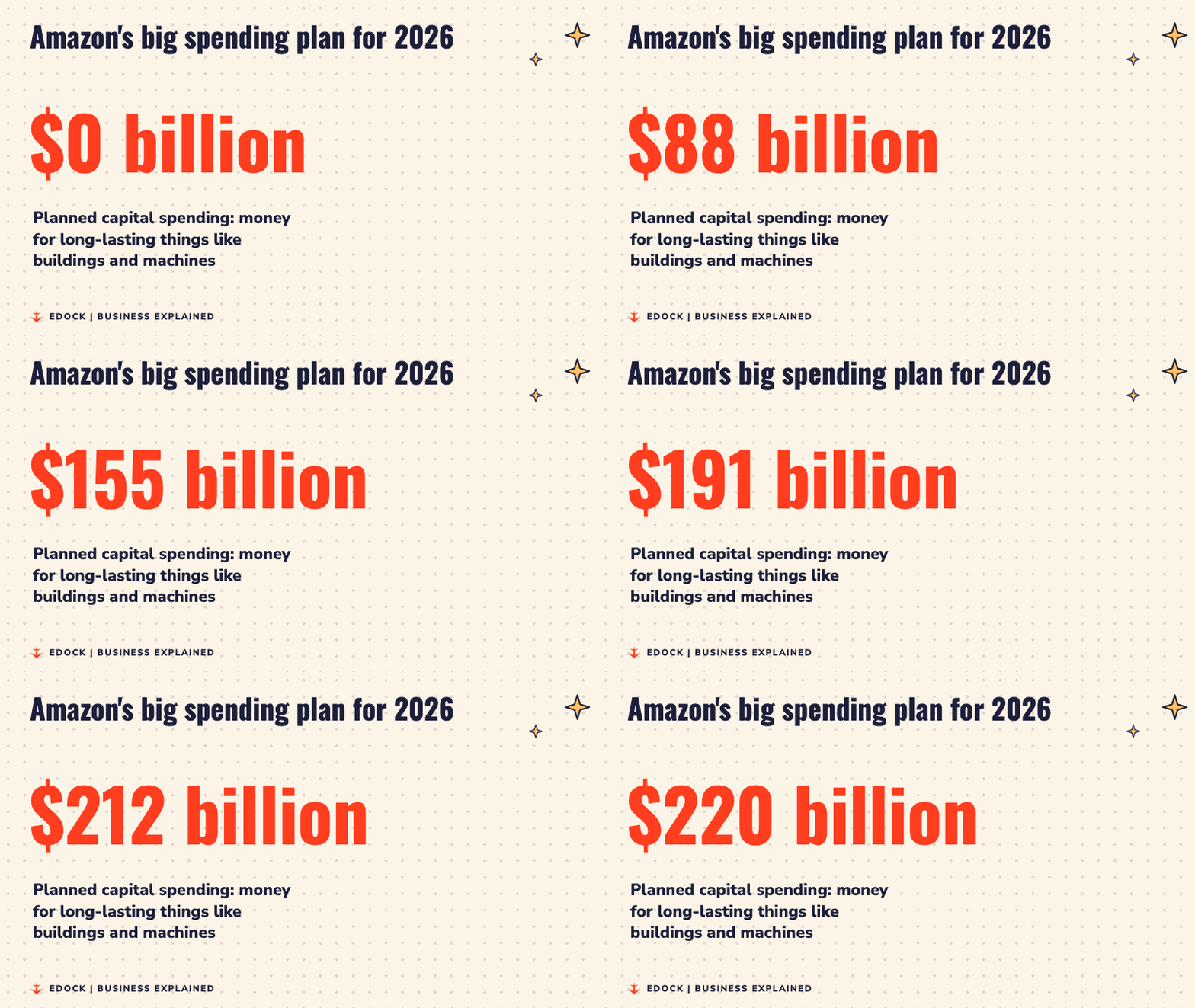
A lot. Earlier this year, Amazon said it would spend about $220 billion on capital expenditure in 2026, according to The Economic Times. Capital expenditure, or capex, is money spent on things that last for years, like buildings and machines. For a samosa stall, capex is the new kadhai and the cart. The oil and potatoes bought every day are not capex.
Even with that much money, demand is running ahead. Jassy said the company "could invest a lot more and it wouldn't be a bad use of capital". In simple words, if the shop is full every day, building more shops is a sensible idea.
Amazon's secret weapon: its own chips
The brain of an AI data centre is the chip. Instead of only buying chips from other firms, Amazon is making its own, called Trainium. Mint reported that Jassy said Trainium chips give 30% to 40% better price-performance than similar chips. Price-performance means how much work you get for every rupee spent, like a phone that lasts longer on one charge for the same price.
Amazon has also disclosed more than $225 billion in future Trainium revenue commitments, including agreements involving the AI companies Anthropic and OpenAI, Mint reported. A revenue commitment is a promise by a customer to pay for something later, a bit like advance booking for a wedding hall.
Is there an India angle?
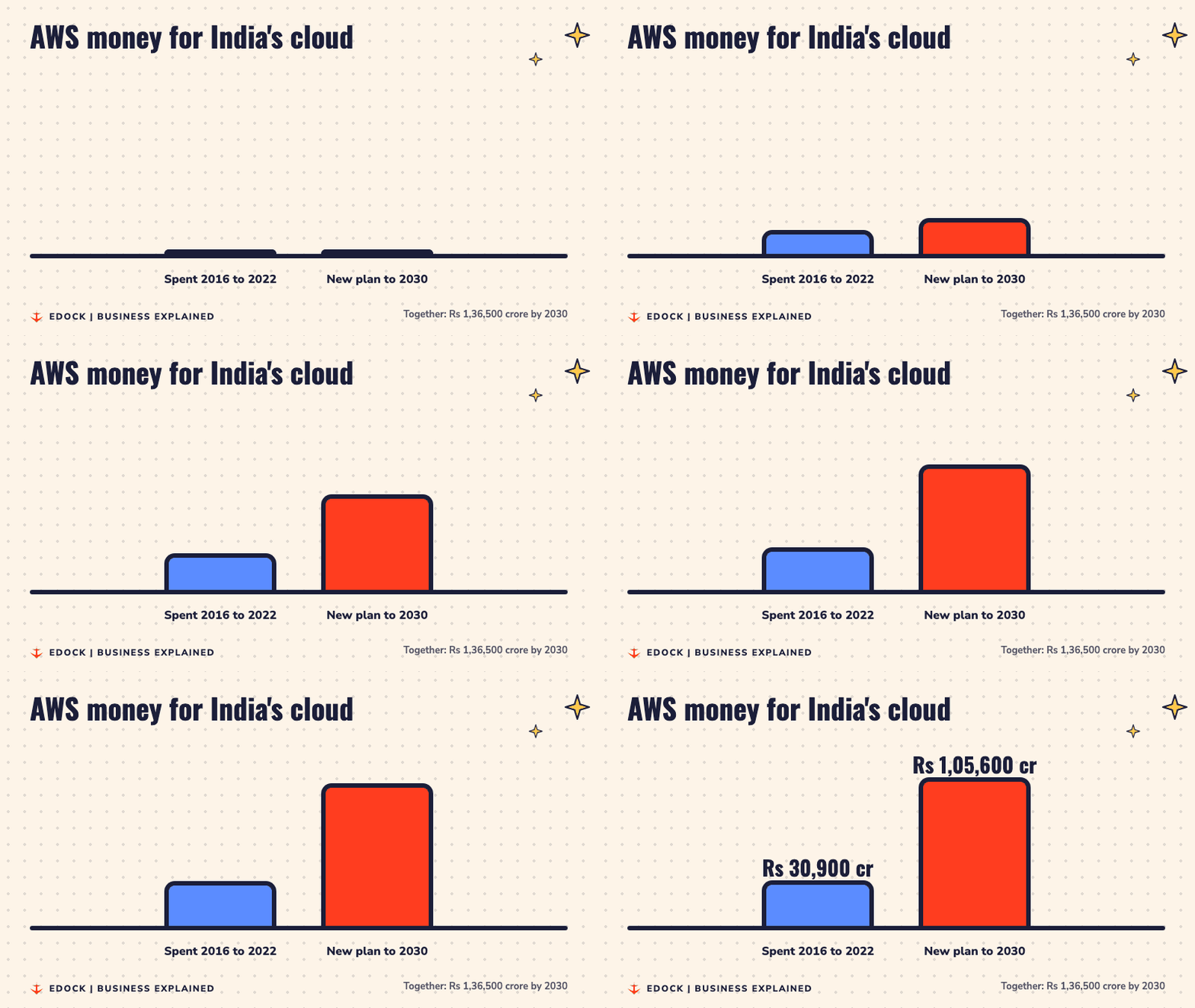
Yes. AWS already runs two groups of data centres in India, one in Mumbai, opened in 2016, and one in Hyderabad, opened in November 2022. In May 2023, AWS announced a plan to invest Rs 1,05,600 crore (US $12.7 billion) in cloud infrastructure in India by 2030. Together with the Rs 30,900 crore it spent between 2016 and 2022, that takes its total India investment to Rs 1,36,500 crore by 2030.
That announcement came long before this week's comments, and Jassy did not talk about India in the reports. Still, it shows that the cloud is not only an American story.
What happens next?
Amazon is scheduled to report its July to September quarter results on 29 October. Mint noted that people will look for more details on how fast the cloud business is growing and how much Amazon is spending on new data centres.
Why should a student care?
Three reasons. First, when a computer rental shop this big says it is full, it tells you how fast AI is growing. Second, cloud and chips are where some of the biggest money in business is going right now, which is useful to know when you think about what to learn. Third, if AI costs really fall tenfold, as Jassy hopes, the AI tools you use for notes, coding or design could become far cheaper and far more common.
For now, the message from Amazon's boss is clear: the shop is packed, and the queue goes all the way to 2028.
Sources
- The Economic Times: Amazon cloud capacity sold out through 2027, CEO Jassy says
- Mint: Amazon's cloud is nearly sold out through 2027
- AWS: What is cloud computing?
- Amazon press release: AWS to invest Rs 1,05,600 crore in cloud infrastructure in India by 2030
- a16z on YouTube: Amazon CEO Andy Jassy on the Infrastructure the AI Era Needs
- Cover photo: Andy Jassy in 2010, by JD Lasica, CC BY 2.0
