Amazon backs a plan for 12 small nuclear reactors at an old Indiana coal site
Version 1 of 1 saved 20 Oct 2026, 8:01 pm IST · Chain line 91
As it was first published
Amazon backs a plan for 12 small nuclear reactors at an old Indiana coal site
Amazon will fund early work on a 960 MW nuclear plant with AEP and X-energy, and plans to buy its power. Here is what a small modular reactor is.
Picture an old coal power plant in a quiet county in the US. The plant is gone. Now, on that same patch of land, a plan is taking shape for 12 small nuclear reactors. And the company paying for the early work is Amazon, the same company that delivers your parcels.
On 19 October 2026, Amazon said it will fund the development of a proposed 960 megawatt nuclear plant in Indiana, and would be the first customer to buy its power. Let us break down what that means, one simple idea at a time.
Who is doing what?
Three companies are in this plan. Think of it like a school cricket match where one friend brings the bat, one brings the ball, and one owns the ground.
- X-energy designs small nuclear reactors. It would supply the reactors.
- American Electric Power (AEP) is a big US power company. It would run the plant, and it owns the land.
- Amazon gives money for the early work, and intends to buy the power under a long-term contract that covers the plant's costs and running for as long as the contract lasts.
The site is the old Breed Generating Station in Sullivan County, Indiana, a coal plant that has been shut down. TechCrunch says it sits just south of a city called Terre Haute.
First, what is a megawatt?
A megawatt (MW) is a way to measure how much electricity something can make at one moment. A single home fan uses a tiny bit of power. A megawatt is a million watts, enough for many, many homes at once.
Back in 2024, TechCrunch wrote that 960 megawatts is enough to power about 1 million homes. That is the same size as this new Indiana plan.
So what is a small modular reactor?
A normal nuclear power plant is like a giant wedding kitchen built from scratch on site, one huge pot at a time. It takes years, and it often goes over budget. TechCrunch notes that the most recent nuclear plants built in the US suffered from big budget overruns and slipped timelines.
A small modular reactor, or SMR, is a different idea. "Small" means each unit makes less power. "Modular" means the same design is repeated, like stacking identical lunch boxes instead of cooking one giant meal. The hope is that building the same thing again and again in factories keeps costs and schedules under control.
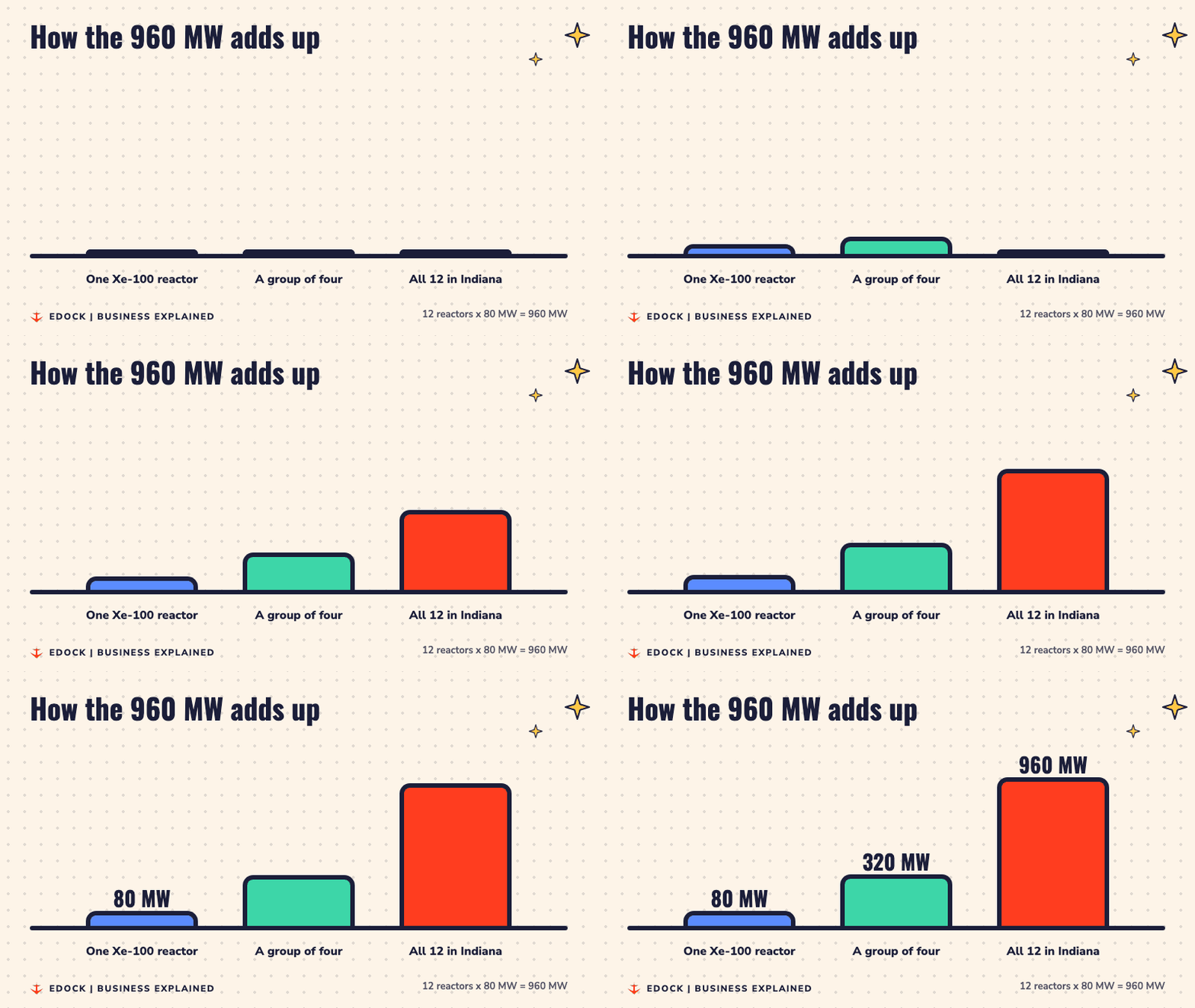
X-energy's reactor is called the Xe-100. Each one makes 80 MW, and the plan puts 12 of them in groups of four. 12 times 80 is 960, which is where the 960 MW number comes from.
The fuel looks like tiny seeds
The Xe-100 uses a special fuel called TRISO. TechCrunch describes it simply: uranium is coated in three layers of carbon, and 18,000 of these poppy seed sized grains go into one "pebble" the size of a billiard ball. Each reactor uses 200,000 pebbles.
Helium gas flows between the pebbles and heats up to 750°C. That heat turns water into steam, and the steam spins a turbine, like wind spinning a paper fan. X-energy says the US Department of Energy calls this fuel the "most robust nuclear fuel on earth" because it can take extreme heat without melting.
Why does Amazon want nuclear power?
Amazon runs huge data centres. A data centre is a building packed with computers that store photos, run apps and now train and run AI. These buildings need power all day and all night, even when there is no sun or wind.
Nuclear plants give steady power round the clock. Power companies call this baseload power. It is like a tap that never stops dripping, instead of rain that comes and goes.
Amazon also has a goal called the Climate Pledge: to be net-zero carbon across its operations by 2040. Net zero means the pollution it adds is balanced out. The companies describe the power from this plan as carbon-free, which is why it fits that goal.
Amazon's Josh Weissman said the companies are "looking to develop nearly a gigawatt of carbon-free power for the regional grid and pay our full costs without passing them to others." A gigawatt is 1,000 megawatts.
One more detail: these reactors would connect to the public electric grid, though Amazon says the power would also serve its data centres. TechCrunch points out that many newly announced power plants are not.
Why an old coal plant site?
X-energy's release calls the land an AEP-owned brownfield site that the project would redevelop for nuclear power. A brownfield is land that was used for industry before and is now being reused. It is like turning an old, closed shop into a new one, instead of clearing a fresh field.
Indiana's government is keen too. Since 2025, the state has passed tax credits and other rules to support small reactors, and Sullivan County recently joined the state's Advanced Nuclear Ready Communities Program, AEP said.

This is a plan, not a plant (yet)
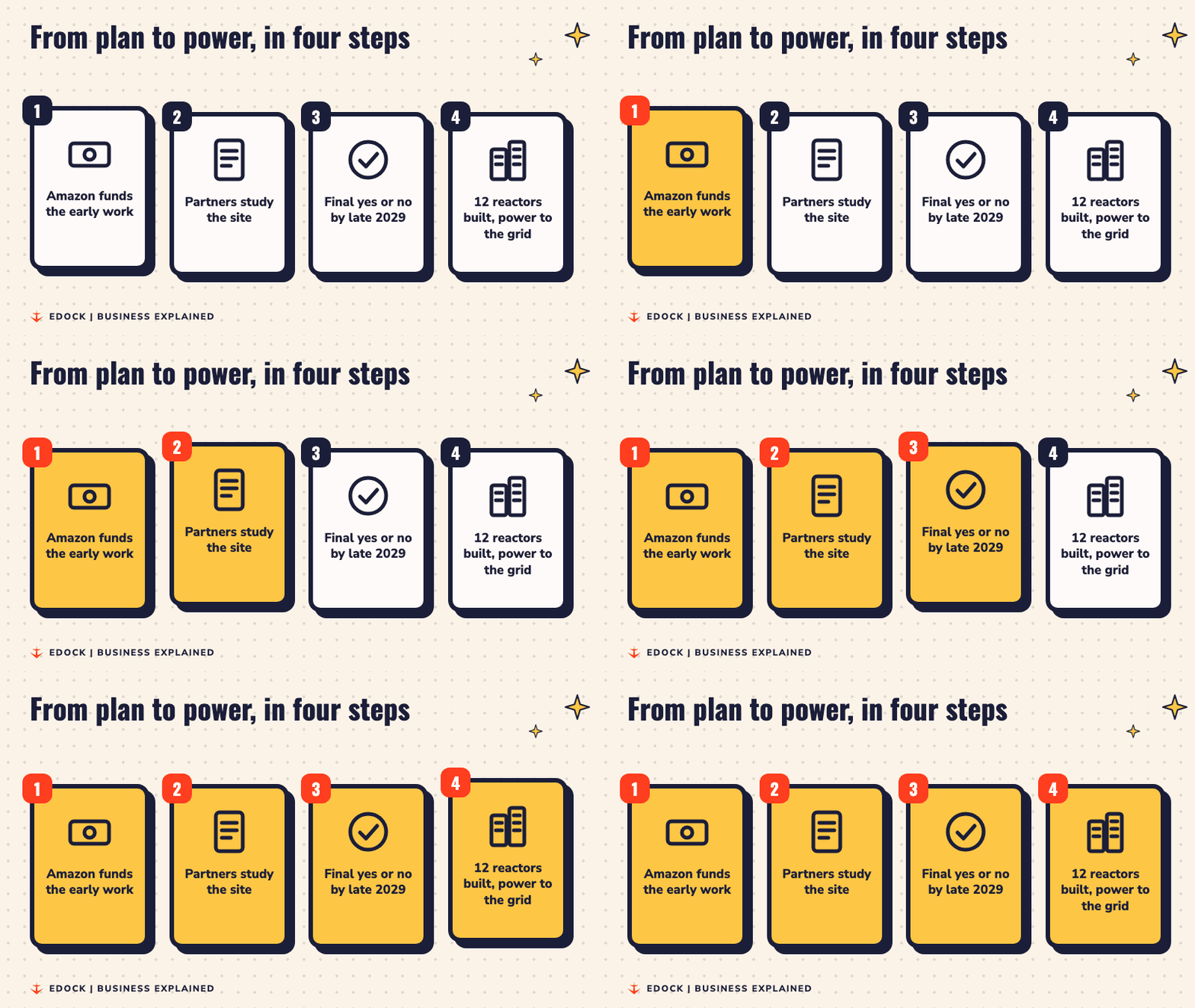
Here is the important part. Nothing is being built right now. AEP and X-energy signed a joint development agreement to study whether the plant can work. It is like checking the ground, the budget and the rules before you open a samosa stall.
Construction only happens if the project reaches a final investment decision, the moment when everyone says "yes, let us spend the big money." Quartz, citing Bloomberg, says the companies expect to decide by late 2029. Terms of the deals were not shared.
There are other hurdles too. X-energy's first plant, at a Dow chemical site in Texas called Seadrift, has not broken ground yet. Its construction permit is in the final phase of review by the US Nuclear Regulatory Commission. Experts quoted by TechCrunch say the savings from mass manufacturing often take about a decade to show up.
The bigger picture
This is the second commercial deal between Amazon and X-energy, and it is three times larger than the first. That first one was Energy Northwest's plan in Washington State for four reactors making about 320 MW. Together, the two companies aim to add more than 5 GW of new nuclear capacity to the US grid by 2039.
Amazon is also buying power from older nuclear plants. It signed a 20-year deal with Constellation Energy for 690 MW from the Calvert Cliffs plant in Maryland.
Investors are watching closely. X-energy listed its shares on the Nasdaq in April at $23 per share. The price jumped 27% on day one, but has since fallen by nearly two-thirds. After the Amazon news, the shares rose about 10% in early trading, before slipping a little.
Why this matters
Every time someone asks an AI a question, a computer in a data centre uses electricity. AEP's chief, Bill Fehrman, spoke of "unprecedented growth in energy demand". Quartz, citing Bloomberg, says AEP needs to add 63 gigawatts of capacity by 2030. So a company famous for online shopping is now paying for the early work on a nuclear plant. Whether these 12 reactors are ever built should be clear by the end of the decade.
Sources
- TechCrunch: Amazon to fund 12 small nuclear reactors at former Indiana coal plant
- AEP press release on PR Newswire
- X-energy: X-energy, Amazon, American Electric Power partner to bring SMR project to Indiana
- Quartz: Amazon and AEP are exploring a 960-megawatt nuclear plant in Indiana
- TechCrunch (2024): Amazon invests in X-energy and small reactors
- Cover photo: Watts Bar Nuclear Plant Cooling Towers, Rhea County, Tennessee, by David Ratledge, CC BY 4.0
