Advent raised $30 billion, and India stays its biggest market in Asia
The Boston buyout firm's new money can reach Indian hospitals, lenders and medicine makers. What private equity is, explained with a chai stall.

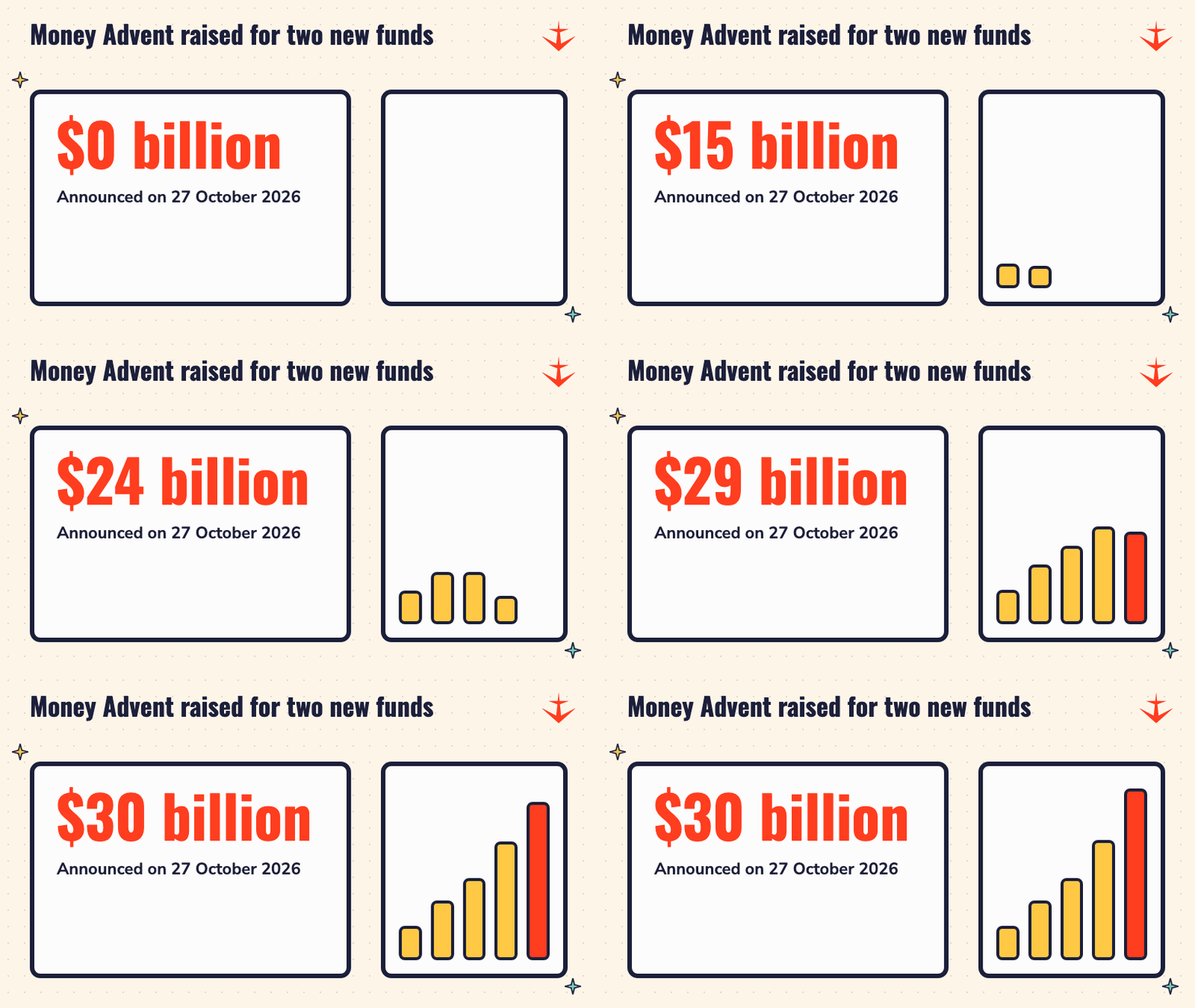
Picture a piggy bank so big it holds $30 billion. On Tuesday, 27 October 2026, the global buyout firm Advent said it had raised just that, across two new funds. And one of its top partners says India will stay its biggest market in Asia, The Economic Times reported.
So this is not only a far away Wall Street story. Some of this money can end up in Indian hospitals, home loan companies and medicine makers, and in the work they create.
What did Advent actually raise?
Advent is a private equity firm from Boston in the US, founded in 1984. Its new money sits in two pots:
- Close to $27 billion for its 11th main fund, called GPE XI. The target was $26 billion, so it beat the goal.
- Over $3 billion for a brand new mid-market fund, which buys smaller companies.
Reuters, in a report carried by KSL, called GPE XI the largest buyout fund closed so far in 2026. Advent's last main fund, raised in 2022, was $25 billion, according to ET.
What is private equity, in chai stall terms?
Think of a friend who runs a busy chai stall. She wants a second stall near the college gate but has no cash for one. You give her money and, in return, you own part of the business. That part is called a stake.
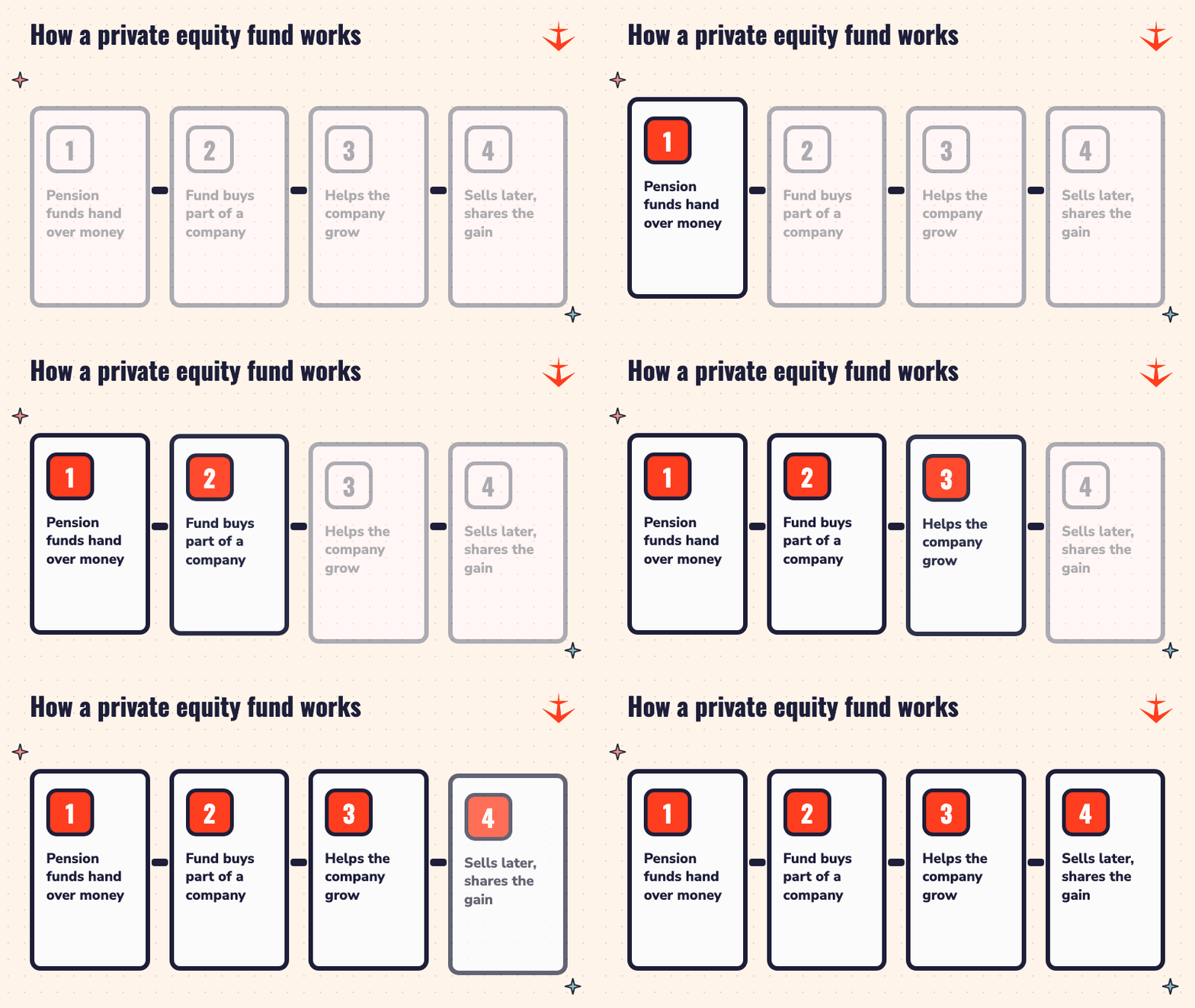
Now you do more than wait. You help her buy milk cheaper, fix the menu and hire a helper. In five years she runs four stalls. You sell your stake to someone else for much more than you paid. That is private equity in one line: buy part of a company, help the company grow, sell later.
A buyout is when the investor buys most or all of a company. Advent is known for buyouts, though in India all its deals this year have been for large minority stakes, ET says, meaning less than half of the company.
Where does Advent find its own money? Mostly from big savers like pension funds (which pay monthly income to retired workers), sovereign wealth funds (money pools owned by countries), family offices and very rich people. ET says over half the money came from public pension funds and sovereign wealth funds, and over 80% came from investors who had backed Advent before.
Why is this a big deal right now?
Raising money has been hard for these firms. Reuters says a long slowdown has made it tougher for buyout firms to sell the companies they own. When they cannot sell, they cannot return cash to their investors, and those investors then have less to put into new funds.
Advent has been selling. In 2026 so far it has cashed out of about 27 businesses for around $13 billion, and put about $10 billion into 38 new and existing businesses, its statement says. Advent links the fresh money to this record of handing cash back to investors.

Why does India get so much attention?
Advent made its first Indian investment in October 2007, backing CAMS, the company that keeps records for many mutual funds. It opened a Mumbai office two years later. Mint says Advent has put more than $5.6 billion into 23 Indian investments since then. ET puts the figure higher, at around $7.5 billion.
This year alone, Advent has put over $875 million (Rs 8,250 crore) into three Indian deals, ET reports: Yatharth Hospitals, Iscon Balaji and Aditya Birla Housing Finance. Shweta Jalan, a managing partner at Advent, told ET: "I believe this should be a good vintage of investing in India." A vintage here means the batch of years in which a fund puts money to work.
She expects India to remain, in her words, "the biggest contributor to our Asia portfolio". Asia Pacific already makes up nearly a fifth of Advent's companies by count, ET says.
What does this mean for work and services in India?
Take Yatharth Hospitals. In September 2026, Advent agreed to put Rs 3,150 crore into the company for a 24.9% stake. This is fresh money that goes into the company, not to an old owner selling shares. Yatharth runs nine hospitals with about 2,800 beds across places like Noida, Faridabad, Gurugram, Jhansi and Agra, and has announced plans to reach about 3,250 beds.
More beds need more doctors, nurses, cleaners and billing staff. The announcement does not give a hiring number, so nobody can yet say how many roles this will create. Yatharth Tyagi, a director of the hospital group, said the aim is to "expand our reach, strengthen our capabilities".
Advent has done this before with brands Indian families know. In 2021 it agreed to buy 72.56% of Eureka Forbes, the vacuum cleaner and water purifier maker, for about Rs 4,400 crore. Its other recent Indian investments, Mint says, include Apollo 24/7, Svatantra and Felix Pharma.
Watch: how Advent sees India
This 2022 TV interview shows Shweta Jalan talking about Advent's plans after its previous $25 billion fund.
Will the new money come to India?
Not straight away, and not all of the money. Advent says GPE XI will keep its focus on Europe and North America, while growing its local presence in Asia Pacific. The new mid-market fund will put $100 million to $350 million into each company, mainly in North America and Europe, in firms worth up to $1.25 billion.
Jalan told ET the new money lets Advent go deeper into five areas: pharma and healthcare, financial services, consumer, technology services and AI, and industrials such as chemicals and auto parts.
Advent manages more than $109 billion and has made 460 investments in 45 countries, its statement says. For Indian readers, the part to watch is the share that lands in companies here, and the work that follows.
Sources
- Advent raises $30 billion for global fund complex, Advent
- Advent's $30 billion fundraise and India, The Economic Times
- Advent International raises $30 billion across two new funds, Mint
- Advent raises $30 billion for latest buyout, mid-market funds, Reuters via KSL
- Advent to invest Rs 3,150 crore in Yatharth Hospitals, Advent
- Advent to buy 72.56% stake in Eureka Forbes, Business Standard
- Advent International, Wikipedia
- Cover photo: Office towers in Bandra Kurla Complex, Mumbai, by N. Vivekananthamoorthy, CC BY 4.0

You may republish this story under CC BY 4.0: credit Pranav Sharma and link to this page.