Adani Ports keeps Rs 3,682 crore profit in three months: how a port company earns
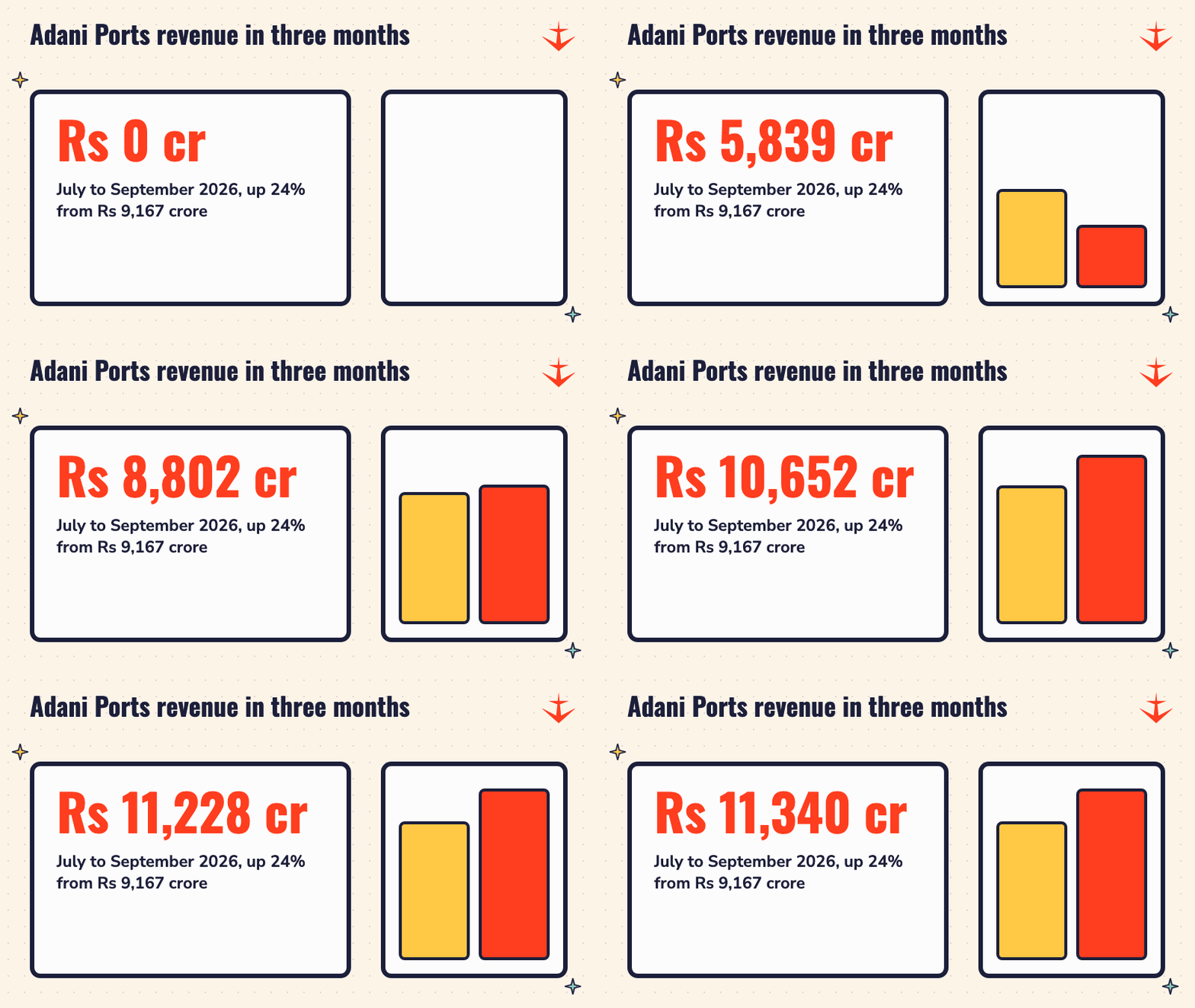
Revenue rose 24% to Rs 11,340 crore as cargo grew at the company's ports in India and abroad, and the company raised its forecast for the year.
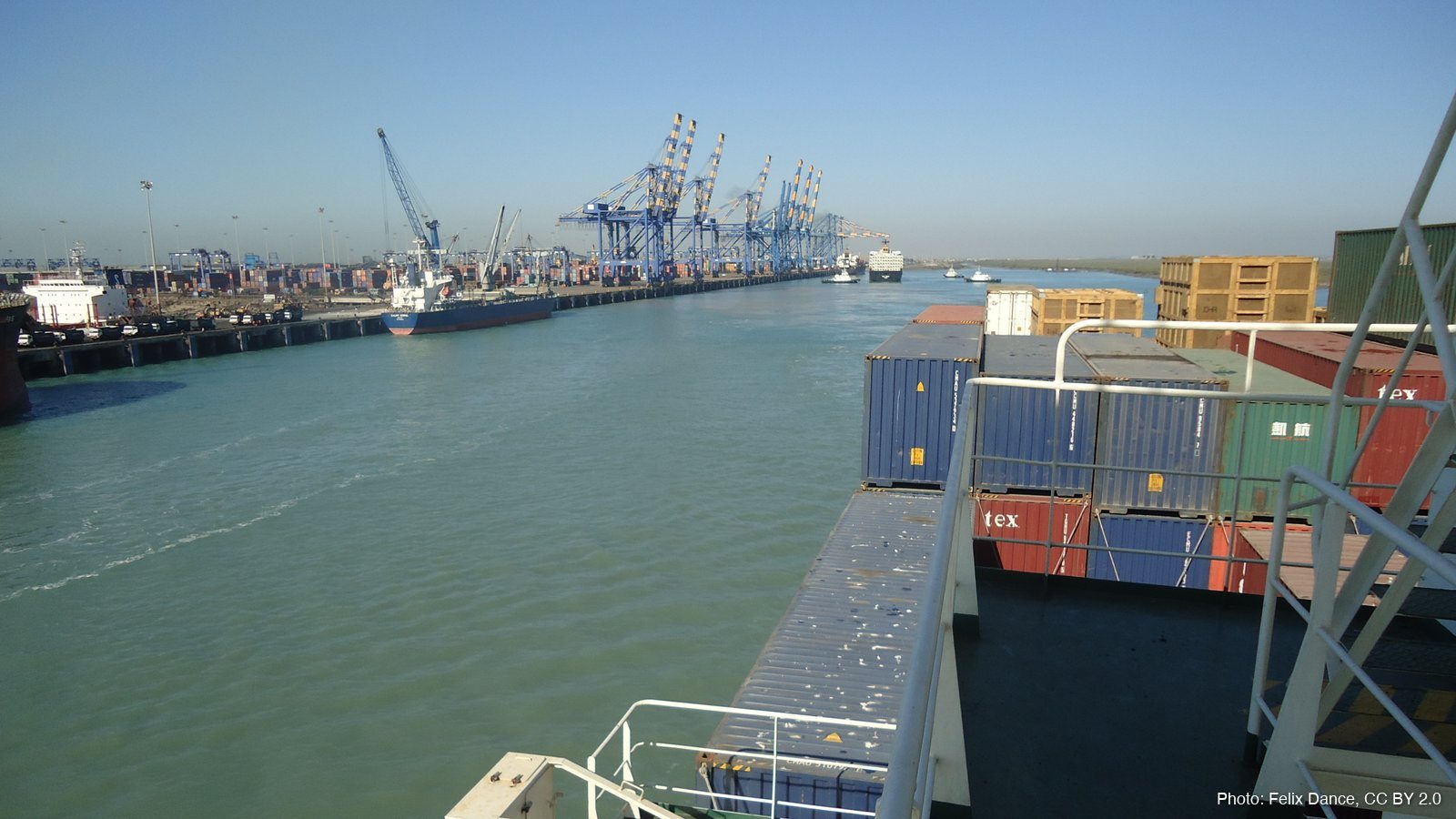
Picture a giant parking lot for ships. A huge ship pulls in, tall cranes lift off its steel boxes, and trucks rush them to factories and shops. The company that runs many of these lots in India, Adani Ports and Special Economic Zone (APSEZ), said on Wednesday, 28 October 2026 that the company kept Rs 3,682 crore as profit in just three months, July to September. That is 18% more than the Rs 3,120 crore it made in the same three months last year.
It also did something companies do only when they feel sure: it raised its own forecast for the full year. Here is how a port company earns its money, and why more ships at the company's docks matter for trade and work in India.
First, the big numbers in plain words
Revenue is all the money that comes in before any costs are paid, like the total cash a samosa stall collects in a day. APSEZ's revenue for the quarter rose 24% to Rs 11,340 crore, from Rs 9,167 crore a year ago.
Profit is what is left after paying for everything: salaries, fuel, loan interest, taxes. That is the Rs 3,682 crore.
There is one more number companies love, called EBITDA. It is the money a business makes from its daily work before paying loan interest, tax, and the slow "wear and tear" cost of its machines. Think of the samosa stall's earnings before it pays the bank for the frying pan loan. APSEZ's EBITDA rose 23% to Rs 6,807 crore.
How does a port company even make money?
A port is like a toll gate for the sea. Every ship that loads or unloads pays a fee for each tonne of goods it moves. The more cargo, the more fees. APSEZ now earns from four main businesses, as its results statement shows:
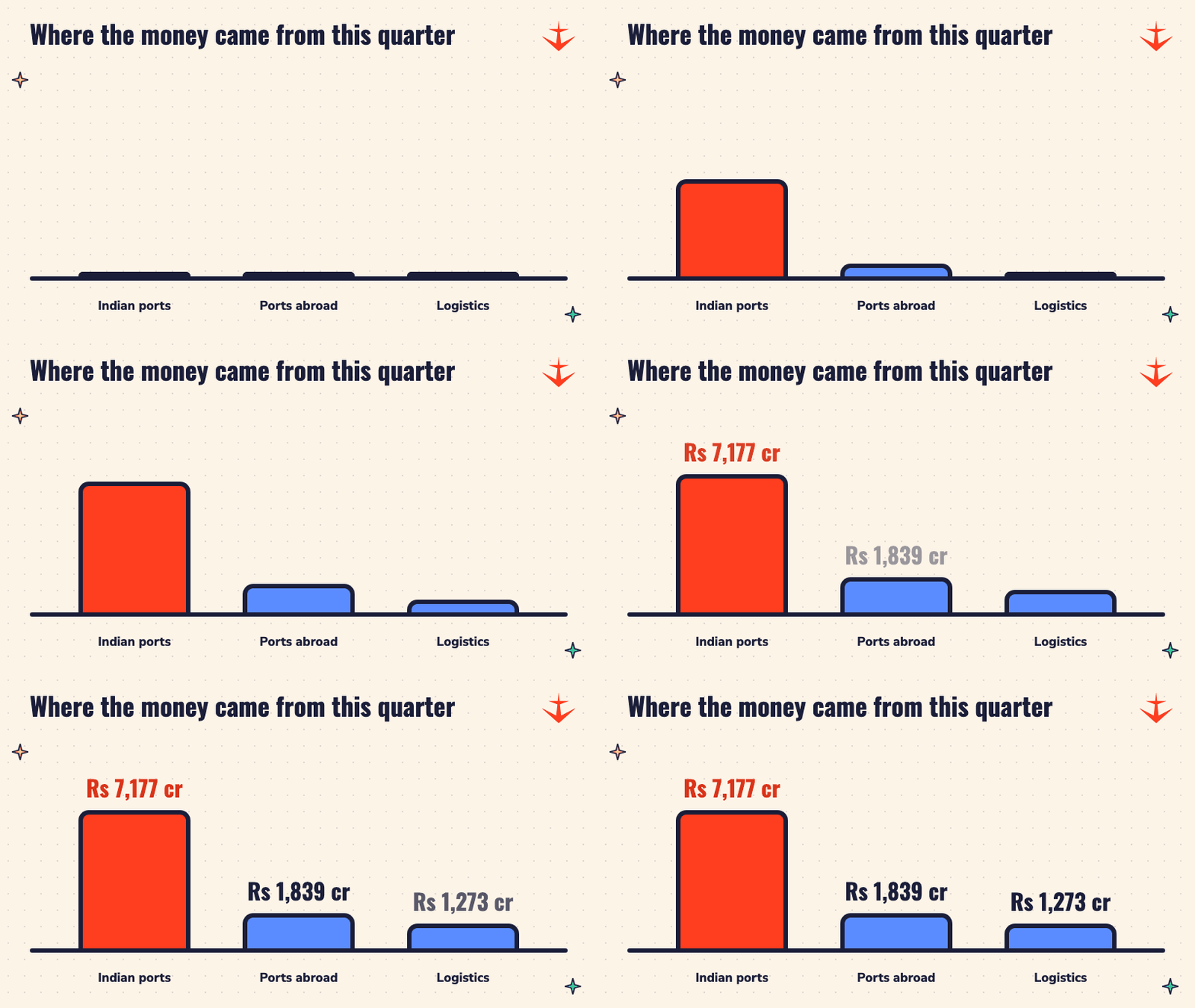
- Ports in India: Rs 7,177 crore of revenue, up 13%. This is still the biggest piece by far.
- Ports abroad: Rs 1,839 crore, up 71%, from terminals in Sri Lanka, Tanzania and Australia.
- Logistics: Rs 1,273 crore, up 21%. Logistics means moving goods on land after they leave the ship, by train and truck, and storing them in warehouses.
- Marine services: Rs 1,007 crore, up 57%. These are the tugboats and other vessels that help giant ships move in and out.
The Indian ports are the money machine. For every Rs 100 of revenue they bring in, about Rs 72.50 stays as EBITDA, a margin of 72.5%. A chai stall that kept Rs 72 out of every Rs 100 would be a very happy chai stall.
How much cargo moved?
At the Indian ports it runs, APSEZ handled 118 million tonnes of cargo in the quarter, according to Goodreturns. That covers coal, crude oil, cars, phones, clothes, fertiliser, almost anything that travels by sea.
The company says about 27.3% of all cargo handled at Indian ports, and 44.4% of all containers, went through its docks. A container is the big steel box you see stacked on ships and trucks. So roughly 4 out of every 9 containers coming into or leaving India passed through an Adani port.
The biggest of these is Mundra Port in Gujarat's Kutch district. This was India's first private port, with the first ship arriving in October 1998, and it is now the country's largest commercial port.
The total space its Indian ports have to handle cargo, called capacity, stood at 671 million tonnes a year. During the quarter the company also won a 30-year lease for two cargo berths at Paradip Port that add 18 million tonnes of capacity, and started handling export and import cargo at Vizhinjam port.
The fastest-growing piece: ports outside India
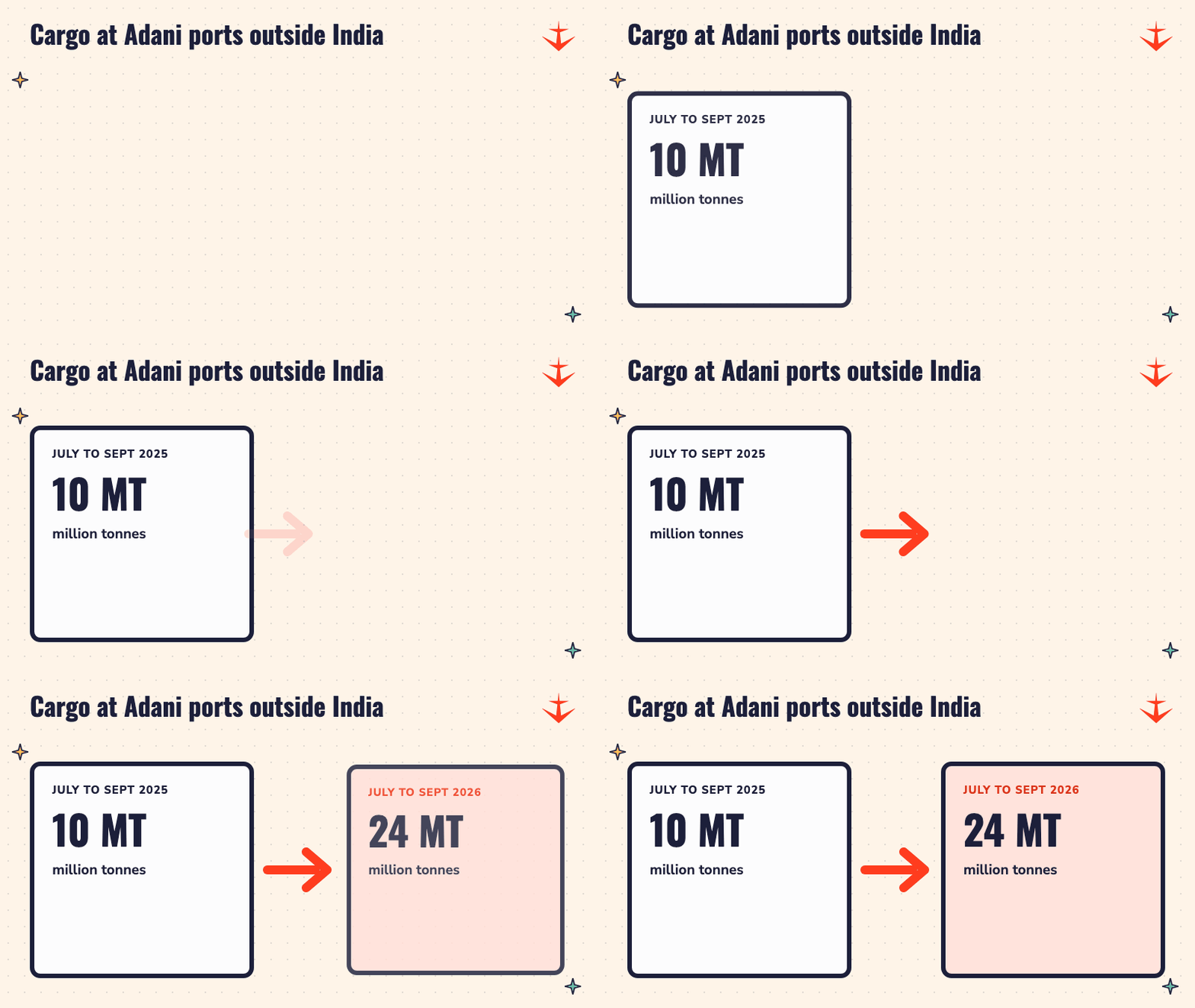
The ports abroad grew the most. Cargo there jumped to 24 million tonnes, from just 10 million tonnes a year earlier. That is like a cricket team going from scoring 100 runs to 240 in the same number of overs.
Most of this came from the Colombo West International Terminal in Sri Lanka, the Tanzania port, and a terminal in North Queensland, Australia, Business Standard reported. The Colombo terminal handled 2 million TEUs in its first 18 months. A TEU is the standard size of one 20-foot container, so think of it as "one box".
Why trucks and boats matter too
The logistics arm had a rough start to the year. Between April and June, a crisis in West Asia slowed things down. By July to September it bounced back: container volumes rose 15% to 167,453 TEUs from 145,310 TEUs in the previous quarter, and trucking revenue grew 28% compared with a year ago.
The company now says it has more than 40,000 trucks on its platform, 12 multi-modal logistics parks (places where goods switch between train and truck), and 3.1 million square feet of warehouses. Its marine fleet grew to 138 vessels from 127 a year ago.
For a small business owner, this is the part that touches daily life. A shoe maker in Agra or a spice trader in Kochi does not deal with the ship. They deal with the truck, the warehouse and the paperwork. A company that owns the port, the train link and the trucks wants to sell all of these as one package, which it calls "shore to door".
A bigger forecast and bigger spending
Companies often share a guidance, which is their own forecast for the year, like a student telling parents what marks to expect. APSEZ raised its revenue guidance for 2026-27 by Rs 1,000 crore, to Rs 44,000 crore to Rs 46,000 crore.
It also raised its capex plan by Rs 3,000 crore, to Rs 15,000 crore to Rs 17,000 crore. Capex means money spent on things that last for years: new berths, cranes, ships and warehouses. Over the past two years the company has already spent Rs 30,346 crore this way. Its long-term aim, by 2030-31, is Rs 91,500 crore of yearly revenue.
CEO Ashwani Gupta said in the company statement:
"Domestic Ports continue to anchor our earnings, while International Ports, Logistics and Marine are emerging as powerful growth engines."
What this means for trade and work
When a port company spends more on cranes, berths and trucks, the money goes into building work at the docks, into orders for machines, and into staff to run them. When more cargo flows through, more truck drivers, warehouse workers and customs agents get busy.
For exporters, more capacity can mean less waiting for a slot on a ship. For shoppers, the phone, the cooking oil or the jeans that arrive by sea often pass through one of these docks first. When one company handles such a big share of India's containers, how well its ports run affects how fast goods move across the whole country.
This NDTV Profit video covers the results and the raised forecast:
And this older documentary, shared by the Adani Group, shows how Mundra Port works:
Sources
- Adani Group: APSEZ Q2 FY27 results statement, 28 October 2026
- Business Standard: Adani Ports Q2 profit rises 18% to Rs 3,682 crore, raises FY27 guidance
- Goodreturns: APSEZ Q2 FY27 revenue up 24%, guidance raised
- Wikipedia: Mundra Port
- Cover photo: The port of Mundra in Gujarat, by Felix Dance, CC BY 2.0

You may republish this story under CC BY 4.0: credit Manpreet Kaur and link to this page.