Adani Green's profit grows 16%, but a slow power grid holds some plants back
India's largest green power company sold 33% more electricity in July to September, yet power lines could take its solar power only 78.9% of the time.

Picture a huge field of solar panels, all clean, all working, the sun shining hard. And still, for part of the day, some of that power cannot be sent anywhere. The wires that should carry it away are not ready. That is the strange problem inside India's biggest green power company right now.
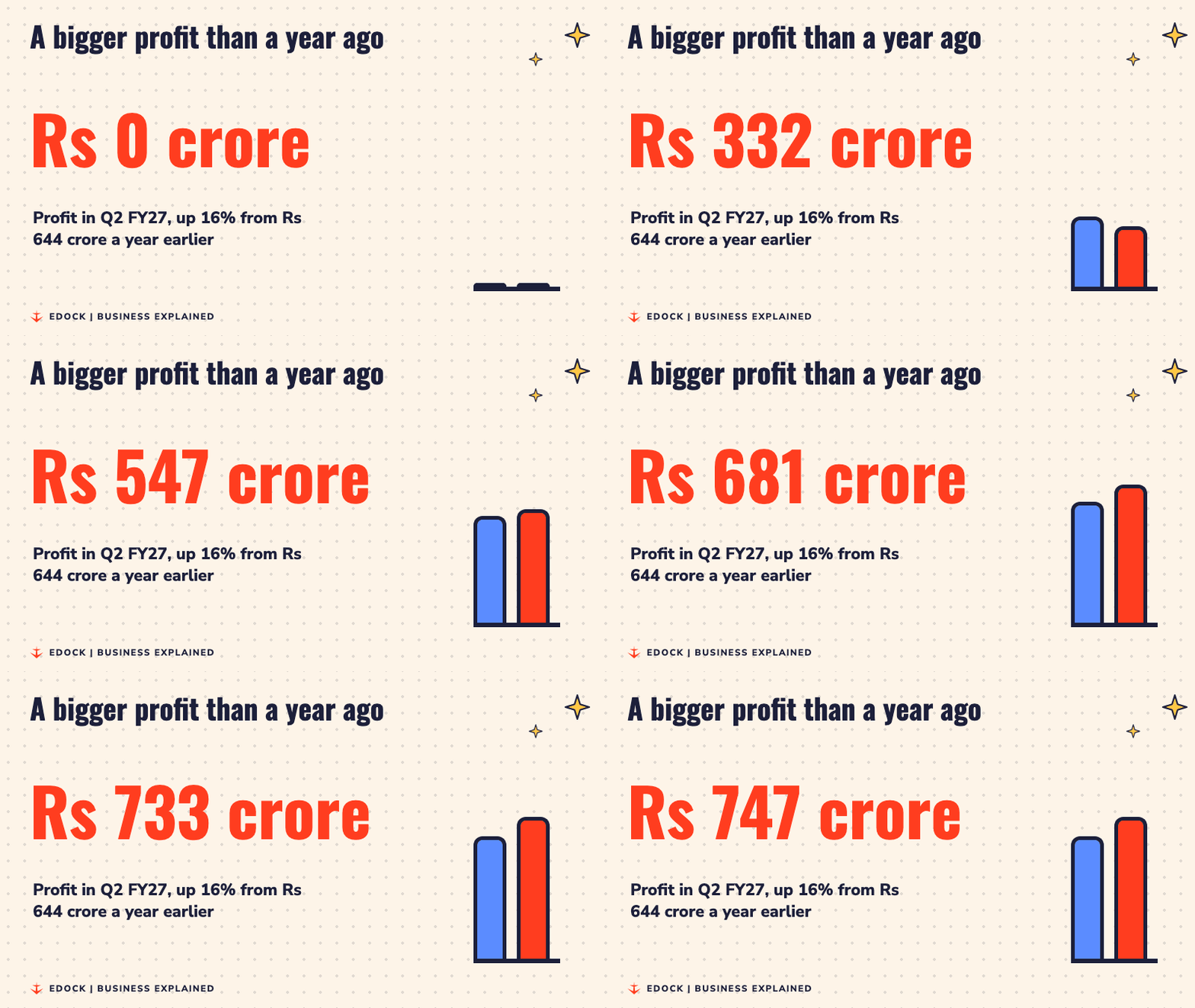
On 21 October 2026, Adani Green Energy shared its results for July to September 2026. Its profit grew about 16% to Rs 747 crore, from Rs 644 crore a year earlier. But a slow power grid held some of its plants back. Here is the whole story, in simple words.
First, what does this company sell?
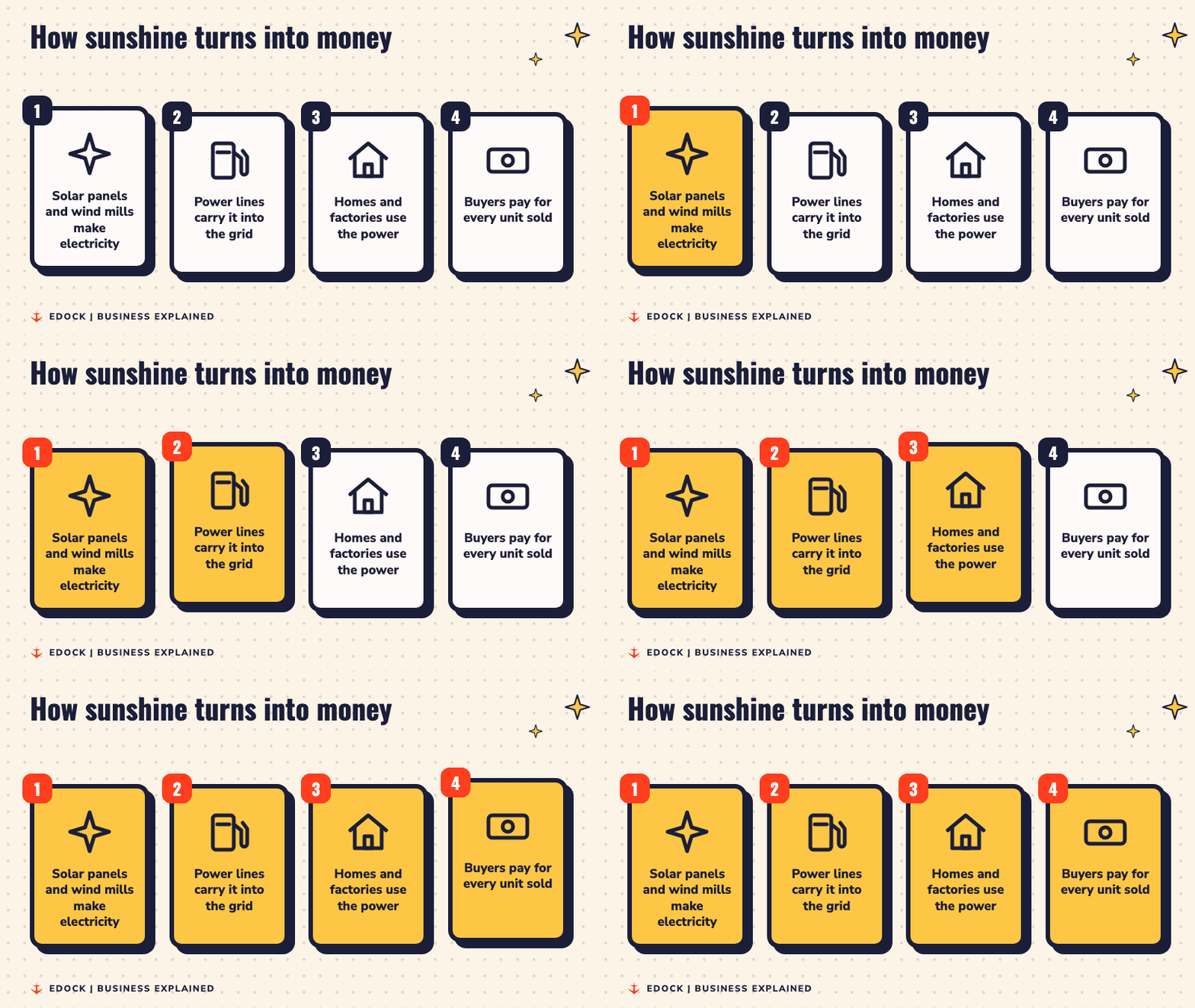
Adani Green Energy does not sell solar panels to you. It builds giant solar farms and wind mills, makes electricity from sun and wind, and sells that electricity to power buyers. Think of a lemonade stall. The stall does not sell lemons. It sells the drink it makes from them. Here, the sun and wind are the lemons, and electricity is the drink.
Mint calls it India's largest renewable energy company. Renewable means the source never runs out. The sun rises again tomorrow. Coal does not grow back.
What is a quarterly profit?
Companies share their results every three months. Each three month block is called a quarter. July to September is the second quarter of India's money year, which runs from April to March. That is why you see the short form Q2 FY27.
Profit is what is left after paying all the bills. If your samosa stall sells Rs 1,000 of samosas and spends Rs 800 on oil, potatoes and rent, your profit is Rs 200.
The company's total income for the quarter rose 39% to Rs 4,520 crore, from Rs 3,249 crore. Mint also gives a second, smaller profit figure. The part of profit that belongs to the company's own shareholders grew 15% to Rs 673 crore. Both ways of counting show growth of about 15 to 16%.
Selling more units of power
You know the word "unit" from your home electricity bill. One unit is the power a 1,000 watt heater uses in one hour. Adani Green sold 12,090 million units in the quarter, 33% more than a year ago.
Money from selling power grew faster. Revenue from power supply, which means money coming in from sales, rose 45% to Rs 4,019 crore. The company's own release shows this was Rs 2,776 crore a year earlier.
There is one more word in the results: EBITDA. It is the money a business makes from its daily work, before paying interest on loans, tax and the slow wear of machines. For power supply, it rose 51% to Rs 3,835 crore. That is 92% of the power revenue. So most of the money from selling power is left over before loans, tax and wear are paid.
How did it grow so fast?
It simply built more. Its working capacity, the most power all its plants can make at one time, reached 20.8 GW by the end of September, 24% more than a year earlier. GW means gigawatt, a giant measure of power.
In one year it added 4,083 MW: 2,957 MW of solar, 805 MW of wind and 321 MW of solar and wind together. Add them up and you get 4,083. In the July to September quarter alone, it switched on 621 MW of new capacity.
Much of this is at Khavda in Gujarat. The company is building a 30 GW plant there, spread over 538 sq km, which it says is almost five times the size of Paris. Khavda already runs 10.8 GW, up from 7.1 GW a year ago. The company's goal is 50 GW across India by 2030.
So what is the grid, and why is it slow?
The grid is the giant web of power lines that carries electricity from power plants to homes, shops and factories. Think of it as the roads. A farmer can grow a huge crop, but if the road to the market is narrow, the trucks get stuck.
India is adding solar power very fast. It reached 168.04 GW of solar capacity by 31 August this year. But the power lines are struggling to carry all the electricity made when the sun shines brightest.
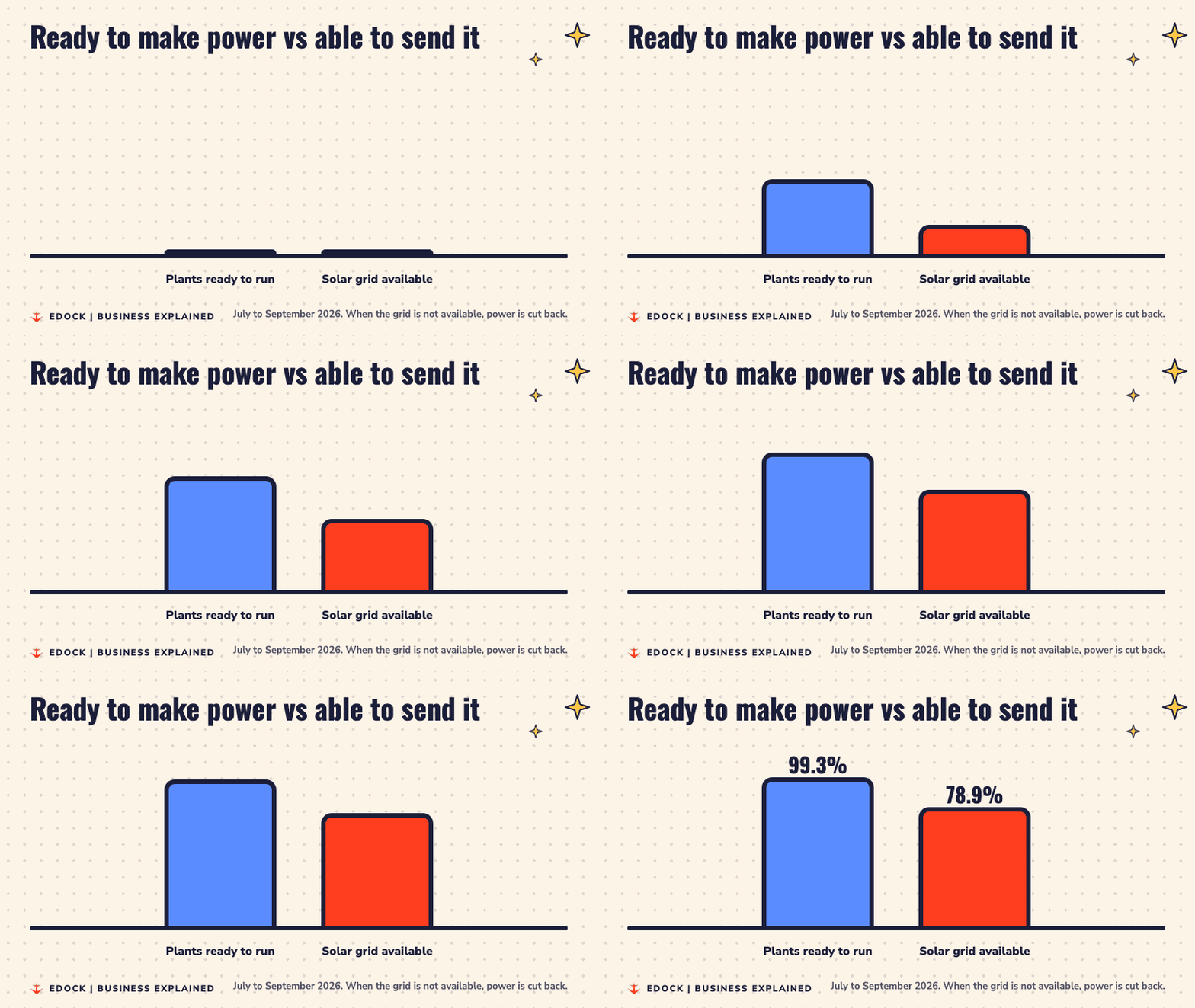
For Adani Green, the plants were ready to work 99.3% of the time in the quarter. But the grid could take solar power only 78.9% of the time. Mint says this cut into its margins, meaning it kept a smaller share of each rupee of sales.
What does "curtailment" mean?
Curtailment means a plant is told to make less power on purpose, even when the sun is bright. Too much power in the wires, more than people are using, can damage grid equipment. So the grid stays balanced by cutting some supply.
Imagine a chai stall at a cricket match. If the cups run out, the stall must stop pouring, even with a full kettle. The chai is ready. There is just no way to hand it over.
The fix: giant batteries
One answer is to store the extra power and sell it later, in the evening. Adani Green added 3,081 MWh of battery storage at Khavda in the quarter, taking it to 6,632 MWh. MWh measures how much energy a battery holds, like the size of a water tank. The company says this is more than half of India's working battery storage, and that it helps tackle curtailment.
India as a whole is moving the same way. Mint reports that the national planning body has proposed that new solar and wind projects add batteries from July 2027.
Building all this costs a lot. In April to September, the company spent about Rs 17,160 crore on new plants and equipment, 38% more than a year earlier.
The big lesson
Making something is only half the job. You also need a way to deliver it. Adani Green grew its profit and sales this quarter, but the story shows that India's clean power future needs more than solar panels. It needs better roads for electricity too, and places to store it.
Sources
- Business Standard: Adani Green Energy Q2 profit grows 16% to Rs 747 crore
- Mint: Adani Green races ahead, but a sluggish grid is not helping
- Adani Green Energy: results release for Q2 and H1 FY27
- BusinessLine: Adani Green Q2 profit rises 16% on higher power supply revenue
- Mint: India's solar boom and its grid challenges
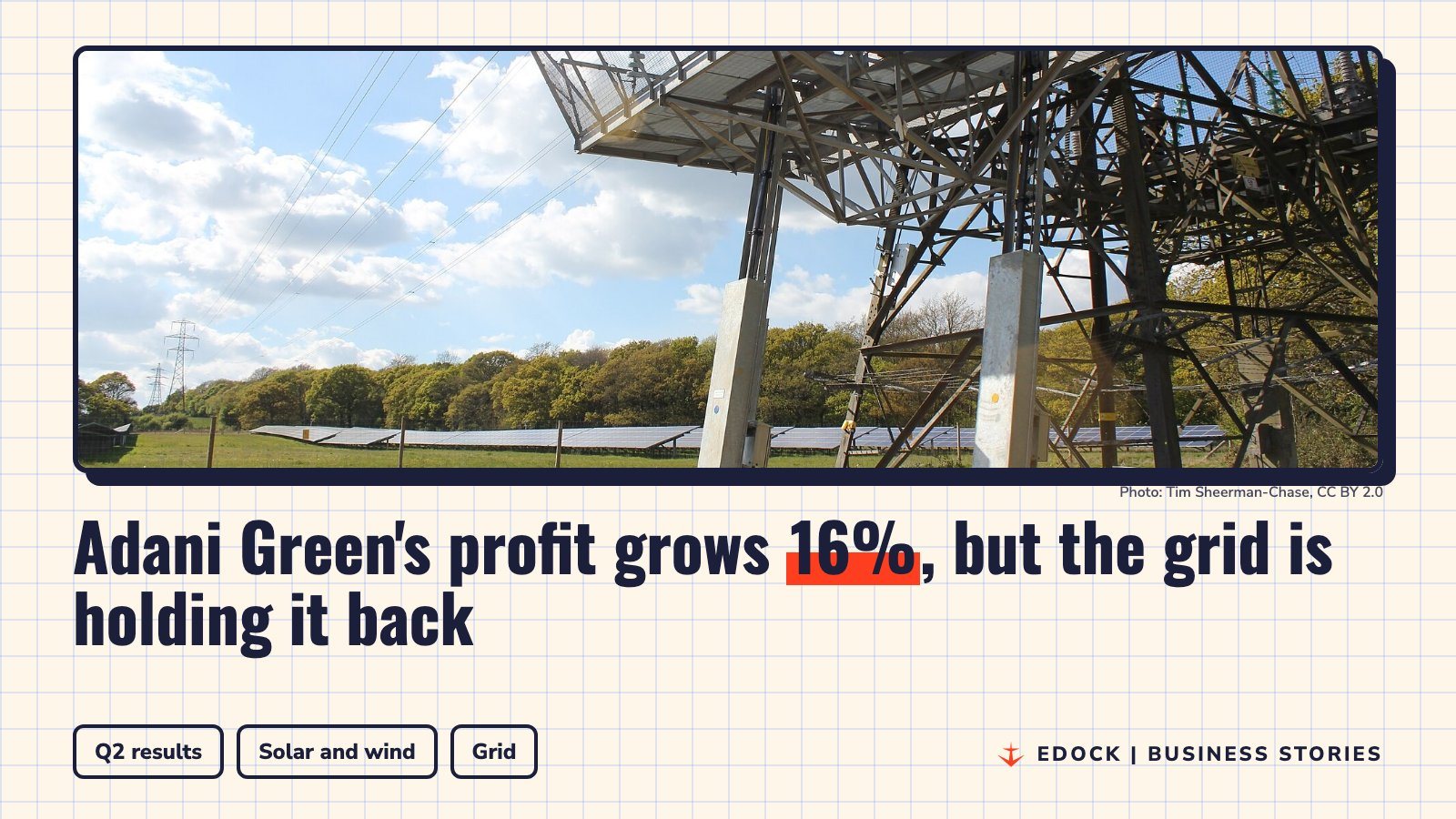
- Cover photo: Wootton Common solar farm transition pylon, by Tim Sheerman-Chase, CC BY 2.0

You may republish this story under CC BY 4.0: credit Pranav Sharma and link to this page.