ACC's profit fell to Rs 93 crore as cement sales dipped and kiln fuel got costlier
The Adani group cement maker earned far less in July to September 2026. A one-time boost last year, rain and costlier fuel all played a part.

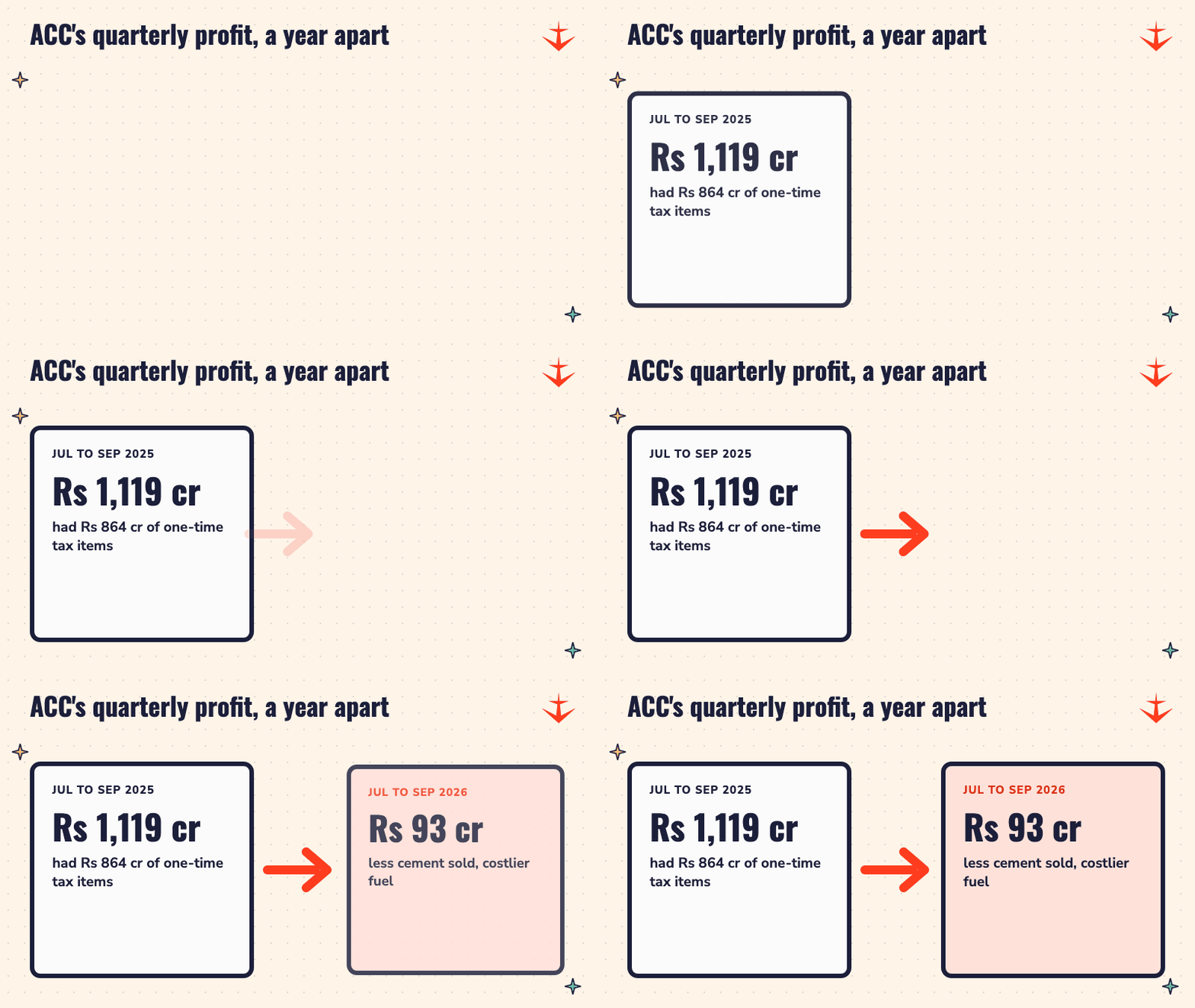
Picture a cement maker whose three-month profit shrinks from Rs 1,119 crore to Rs 93 crore. That is ACC, one of India's oldest cement companies. On 27 October 2026, ACC said its profit for July to September 2026 was Rs 93 crore, down from Rs 1,119 crore a year earlier. Business Standard put the fall at 91.7%.
The reasons say a lot about fuel, rain and what building a home costs.
First, who is ACC?
ACC was formed on 1 August 1936, when eleven cement companies joined into one. Today its parent company is Ambuja Cements, and both are part of the Adani group, the company's release says. ACC runs 22 cement manufacturing sites and 125 ready-mix concrete plants across India.
Quarter, revenue, profit: the quick version
Companies share their numbers every three months, called a quarter. July to September is the second quarter of India's financial year, or Q2. FY27 means April 2026 to March 2027.
Revenue is all the money that comes in from sales. Profit is what is left after paying for everything: fuel, power, salaries, transport and tax. If a chai stall sells Rs 1,000 of tea in a day and spends Rs 950 on milk, sugar and gas cylinders, its profit is Rs 50.
Why the drop looks so huge
A big part of this fall is about last year, not this year. The profit of Rs 1,119 crore in July to September 2025 had two one-time boosts. ACC's release says that figure included a tax provision reversal of Rs 659 crore and Rs 205 crore of interest on an income tax refund.
A tax provision is money kept aside in case tax is owed. If the tax is not due, the money flows back into profit, like Rs 500 saved for a library fine that never came. Your pocket looks fuller, but you earned nothing new.
Together those two items were Rs 864 crore. So much of the 91.7% fall is last year's one-time boost not repeating. But the daily business also earned less, and that part is real.
Fewer bags sold, less earned on each
ACC sold 9.72 million tonnes of cement in the quarter, against 10.0 million tonnes a year earlier, its results table shows. Revenue from operations slipped to Rs 5,689 crore from Rs 6,005 crore. Business Standard, carrying a PTI report, gave Rs 5,656 crore; this post uses the consolidated figure (ACC plus the smaller companies it owns) from ACC's own release.
Now EBITDA. It is a long word for a simple idea: the money a business makes from its daily work, before interest, tax and the slow wear of machines. ACC's operating EBITDA fell to Rs 401 crore from Rs 846 crore. On each tonne of cement, ACC made Rs 414, against Rs 849 a year ago.
Its margin fell to 7.0% from 14.1%: out of every Rs 100 of sales, about Rs 7 is now left after daily costs, against about Rs 14 a year ago.
The supply deal with Ambuja
ACC linked its lower sales volume to a Master Supply Agreement, or MSA, with its parent Ambuja Cements. Cement makers sign such deals with parent companies to save on transport and grow the group's total sales, Business Standard explains.
Think of two shops run by one family: the family sells more in total, but each shop's own sales can rise or fall. CEO Vinod Bahety said in the release: "While the reported numbers are not strictly comparable due to the impact of MSA, the underlying business momentum remains encouraging".
Rain, shutdowns and a costlier fire
ACC also listed the monsoon, seasonal shutdowns, high energy costs and "constraints in domestic coal availability", in its own words. Rain slows building work. And short coal supply hurts, because cement is baked in a huge oven called a kiln that burns fuel all day.
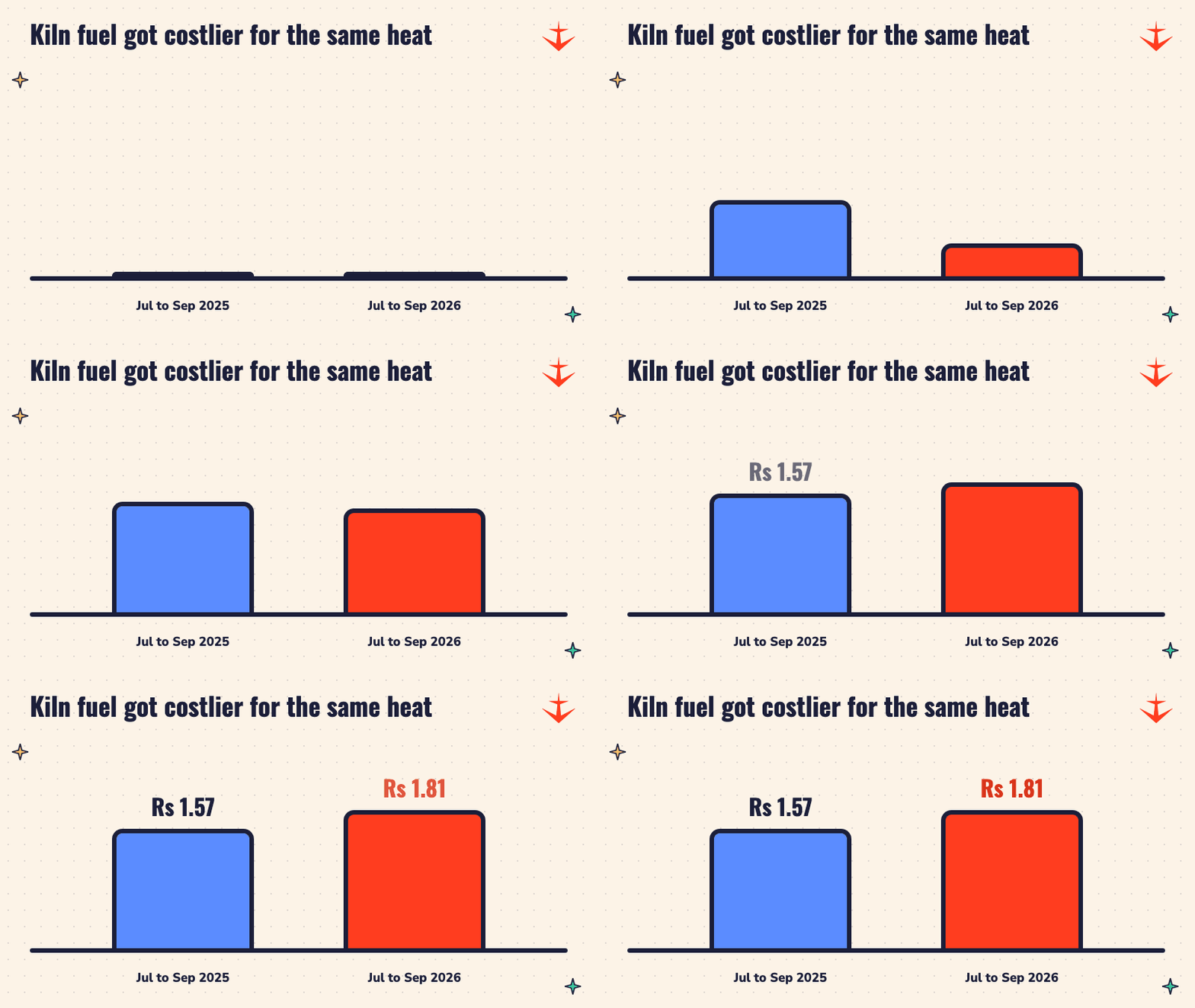
That fuel got pricier. ACC paid Rs 1.81 for every thousand kilocalories of heat from kiln fuel, up from Rs 1.57 a year earlier. A kilocalorie is a unit of heat, the same unit printed on a biscuit packet. So the same heat now costs about 15% more.
Input costs for all cement makers have risen by Rs 300 to 400 per tonne over six to seven months, Emkay Research said in a report covered by Construction World.
What this means for someone building a home
When costs rise, cement makers try to raise prices. In September 2026, the all India average trade price of cement rose by Rs 7 to Rs 356 a bag, Centrum Broking said in a report covered by ETV Bharat. Across July to September, the average was Rs 351 a bag. The trade price is what dealers charge in the retail market, where families buy bags to build or repair a home.
More hikes were expected. Centrum said companies could raise prices by Rs 5 to 20 a bag in October. Emkay saw a high chance of a Rs 10 to 15 rise from mid October. A Rs 15 rise on a Rs 356 bag is about 4% more. Small for one bag, but a house needs a lot of bags.
Hikes do not always stick: in several markets, dealers kept selling at older prices to meet quarter-end targets, Centrum noted. ACC itself said "improving pricing momentum should moderate the impact of elevated fuel and energy costs".
The bright spots
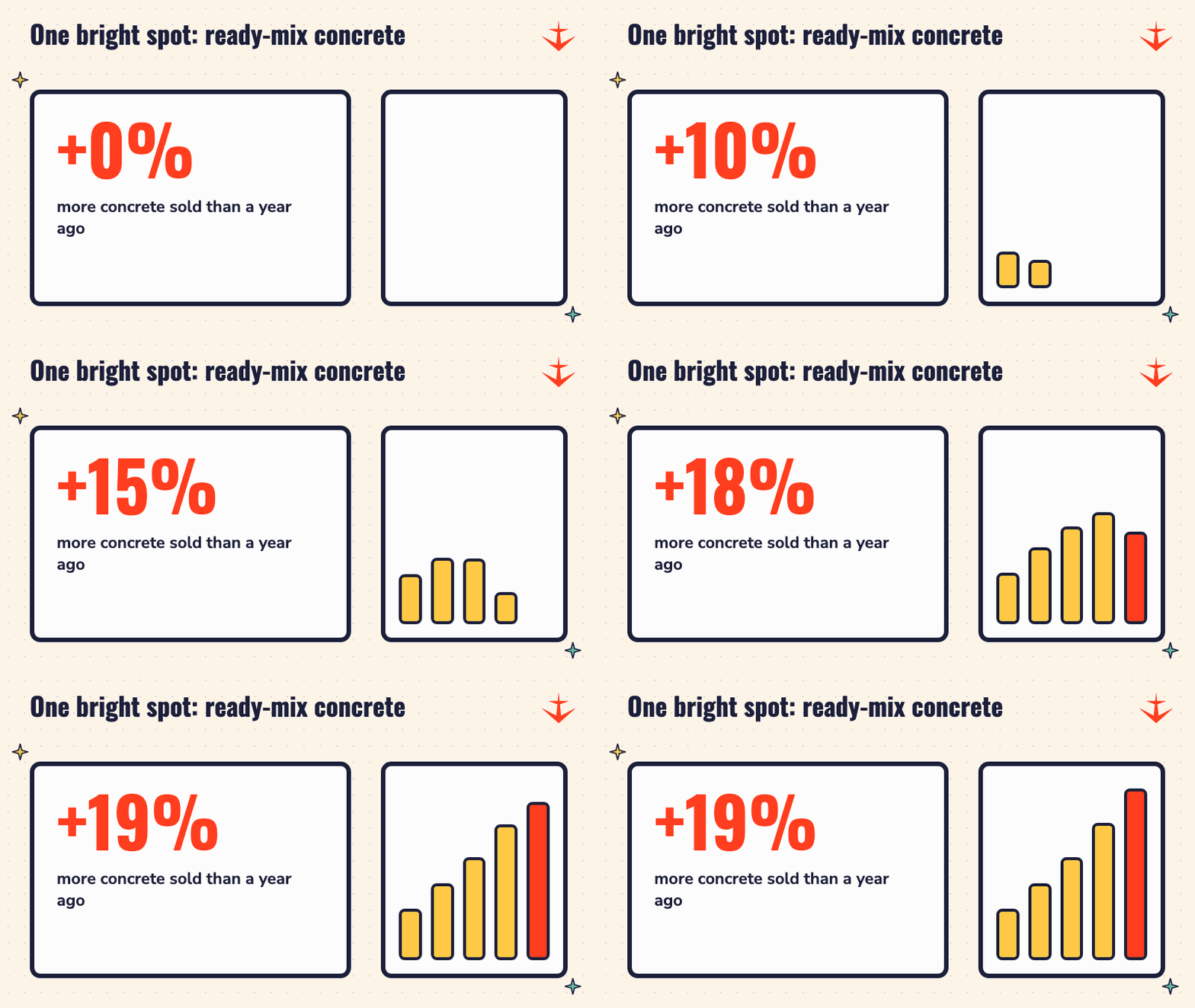
ACC's ready-mix concrete business grew. Ready-mix is cement, sand, stones and water mixed at a plant and sent out in spinning drum trucks. ACC sold 1.07 million cubic metres of it, up 19% from a year ago, and revenue from it rose 26.4% to Rs 574 crore, Business Standard reported.
ACC also added 3.4 million tonnes a year of cement capacity: a new 2.4 million tonne grinding unit at Salai Banwa in Uttar Pradesh and 1.0 million tonne more at Kalamboli in Maharashtra, as Free Press Journal reported. Capacity is how much a plant can make in a year, like the most samosas a stall could fry.
Sales through dealers and shops, called trade sales, rose to 78% of ACC's cement sales, up 7 percentage points, according to APAC News Network. Premium cement, the costlier kind, was 47% of trade sales. Here is ACC's monsoon ad for one such product.
What comes next
ACC and Ambuja are joining into one company. ACC's shareholders approved the plan on 29 September 2026, with over 95% of the votes cast by ACC shareholders in favour, the release says. The plan now goes to the National Company Law Tribunal, a court-like body that clears company mergers. ACC expects it to finish within FY27, by March 2027.
This NDTV Profit video, from when Ambuja's board first cleared the plan, explains the merger.
ACC says demand should pick up after the monsoon, helped by housing, infrastructure and government spending. Central government capital spending, money spent on things that last for years like roads and railway lines, rose 18% to Rs 5.1 lakh crore in April to August 2026, from Rs 4.3 lakh crore a year earlier. The company has no debt, and its net worth, which is everything it owns minus everything it owes, is Rs 20,680 crore.
The lesson: a headline fall of over 90% can hide a one-time effect from last year. The real story is rain, a costly fire inside the kiln, and cement makers trying to charge a little more per bag.
Sources
- ACC Limited: media release on Q2 FY27 results, 27 October 2026
- Business Standard (PTI): ACC Q2 profit slumps 91% to Rs 93 crore
- Free Press Journal: ACC Q2 FY27 net profit down to Rs 93 crore
- APAC News Network: ACC Q2 results
- ETV Bharat: cement companies likely to raise prices by Rs 5 to 20 per bag in October
- Construction World: cement prices likely to rise Rs 10 to 15 per bag from mid October
- Wikipedia: ACC Limited
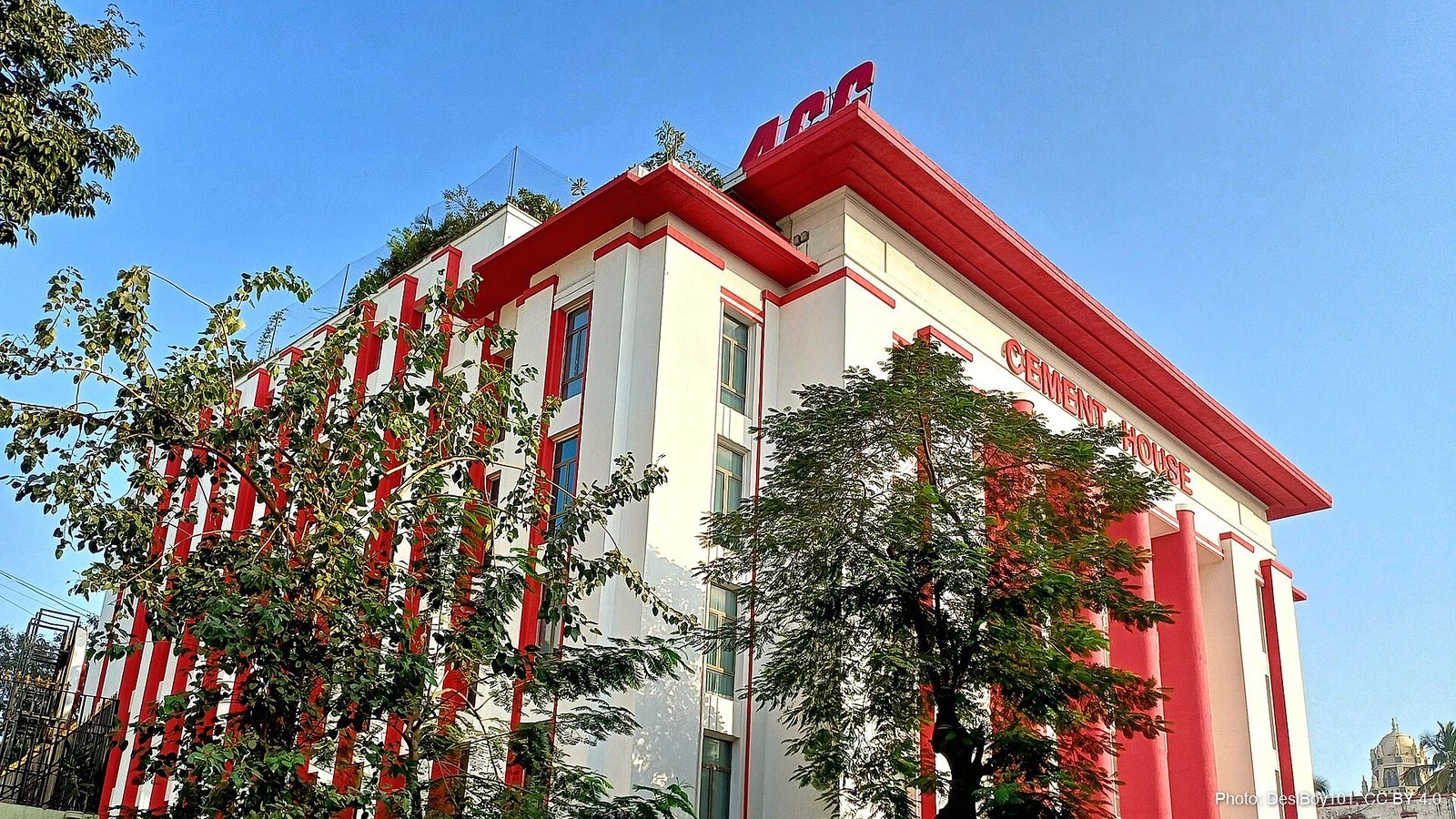
- Cover photo: ACC Cement House, Churchgate, Mumbai, by DesiBoy101, CC BY 4.0

You may republish this story under CC BY 4.0: credit Pranav Sharma and link to this page.