A Bengaluru studio makes phone games for the world. It just raised $10.5 million
Version 1 of 1 saved 14 Oct 2026, 2:01 pm IST · Chain line 30
As it was first published
A Bengaluru studio makes phone games for the world. It just raised $10.5 million
Spill Games makes free puzzle games, and about half its players were in the US. Here is how free games make money.
Picture this. Someone in the US is waiting for a bus. They open a free puzzle game on their phone and fill in a tricky maths crossword. They have no idea the game was made by a small team in Bengaluru.
That team is Spill Games. On October 14, 2026, it said it had raised $10.5 million, which is about ₹100 crore. Let us see how a two-year-old studio got here, and how free games make money at all.
Who makes Spill's games?
Spill Games was started in 2024 by three people: Om Misra, Tapan Ranjan and Harsh Garg. All three worked earlier at PlaySimple Games, another game company. Om Misra is the CEO and Harsh Garg is the CTO, says PocketGamer.biz. The CEO runs the company. The CTO leads the tech side.
Spill makes casual games. These are simple games you can play for two minutes while your chai cools down. No big console, no long story. Just tap, solve and smile.
Right now it has six games. Some of them are Cozy Finds, Sticker by Number, Zen Math Crossword, Bird Rescue Jam and Grill Master.
A crossword, but with maths
Take Zen Math Crossword. Its App Store page says it blends arithmetic with classic crosswords. Instead of words, you fill the grid by solving plus, minus, times and divide sums.
On Apple's US App Store, it has a rating of 4.9 out of 5 from about 9,700 ratings. The seller name on the page is Spillvoy Gaming Private Limited. Here is what playing it looks like.
Made in India, played far away
Here is the surprising part. Most of Spill's players are not in India.
When Spill raised money in April 2026, it said about 50% of its users were in the US. Brazil came next with 15%, and Japan with 10%. So roughly three out of every four players were in just these three countries.
How does a free game make money?
Spill's games are free-to-play. That means you download them for free. So where does the money come from? Two places.
- Ads. A short ad pops up between levels. Companies pay the game maker to show it to you. It is like the ads painted on a cricket ground. The match is free to watch on TV, and the brands pay.
- In-app purchases. These are small buys inside the game, like extra hints or bonus levels. Zen Math Crossword's page lists items from $1.99 to $19.99.
This is very different from real-money gaming, where players bet money to win money. India has banned real-money gaming, and Inc42 notes that Spill's model puts it in a different segment from those companies.
Try many games, keep the winners
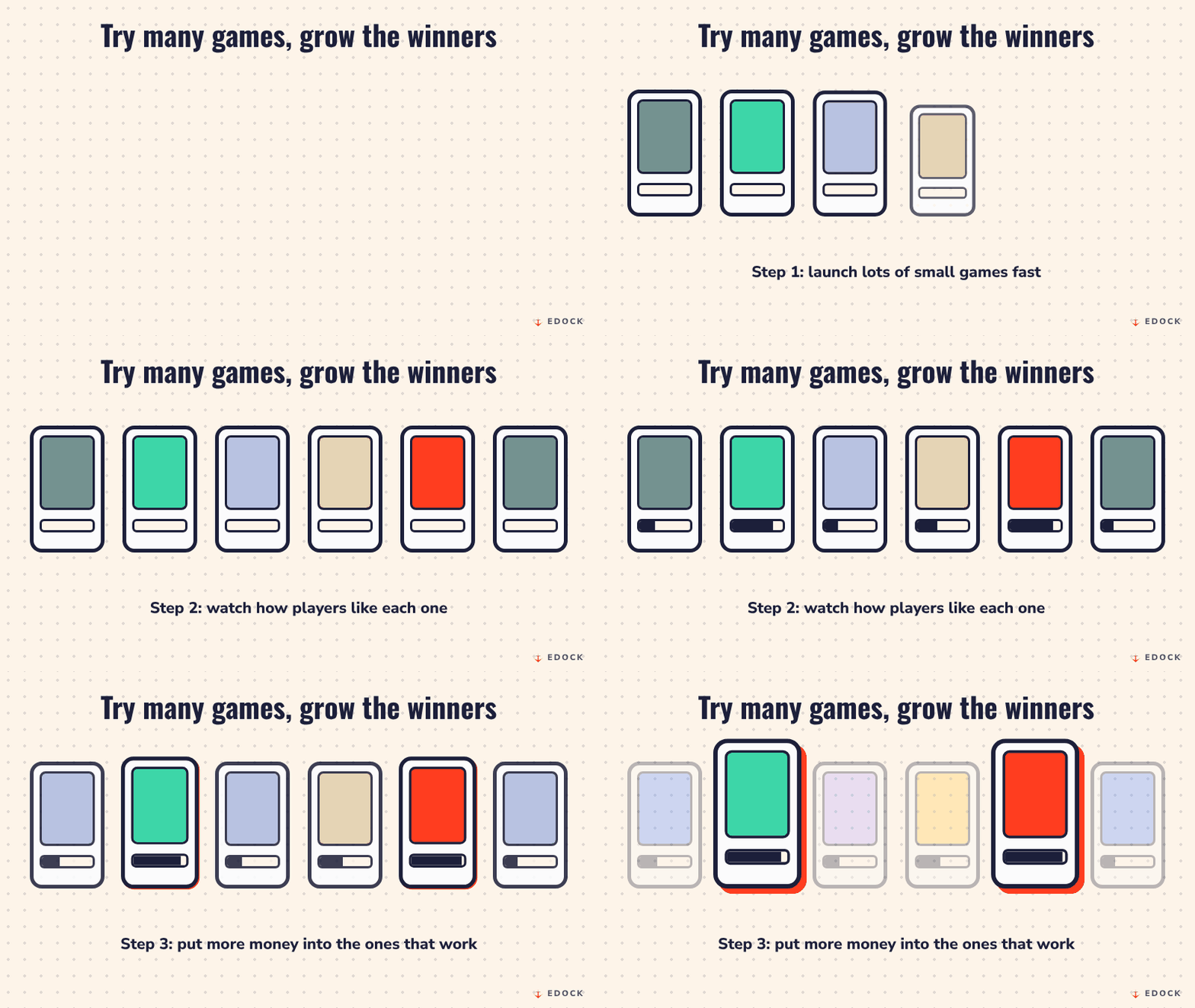
Most game studios dream of one giant hit. Spill is trying something else. It launches games quickly, then watches what players do. The games that do well get more money and effort.
Think of a samosa stall owner who tries six new fillings in one week. Paneer sells out every day. Two others sit untouched. Next week, the owner makes far more paneer samosas. That is the idea.
To do this fast, Spill built its own toolbox called Compass. It helps with tracking how players behave, keeping them coming back, earning money and running the games every day. Spill says it can reuse these tools across games, and it is aiming to build games about four times faster than the traditional way.
In April, Spill said it wanted to test over 20 prototypes in 18 months. A prototype is a rough first version, like a practice sketch before the final drawing.
Three rounds of money
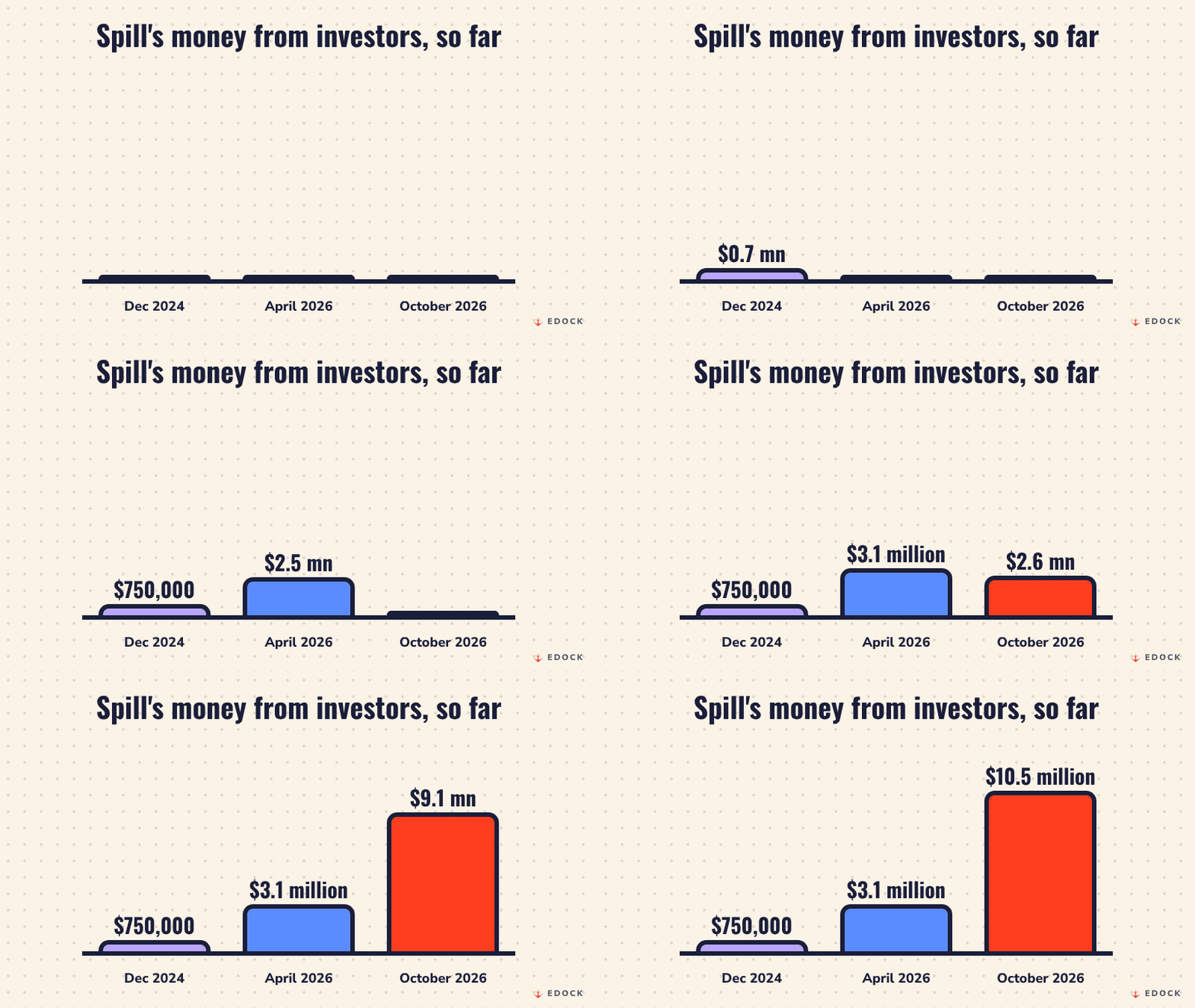
Spill has raised money three times, according to Entrackr.
- December 2024: $750,000 from All In Capital, M-League and some angel investors. Angel investors are single people who put their own money into a startup.
- April 2026: $3.1 million in a seed round, co-led by Centre Court Capital and PeerCapital.
- October 2026: $10.5 million in a Series A round, led by Elevation Capital. Centre Court Capital and PeerCapital joined again.
A Series A is usually the first big round after the seed round. It is for a startup that has shown its idea can work and now wants to grow. The new round is more than three times the size of the seed round. Add all three together and Spill has raised about $14.35 million so far.
What will Spill do with the money?
The plan has five parts.
- Grow the games that are already working.
- Make more new games.
- Make Compass smarter, with more AI and tech.
- Bring in new players. Grown ups call this user acquisition.
- Hire a few more people, carefully.
Why this matters for India
Mobile games are a huge business. Entrackr says the world's mobile gaming market is expected to be about $176.7 billion in 2026, and about $256.2 billion by 2030.
Spill is a small Bengaluru team building games for players around the world, and big investors are now backing it. Its bet is not on betting. It is on simple puzzles people can enjoy on the bus.
Sources
- Inc42: Spill Games raises $10.5 Mn to scale AI-led mobile gaming studio
- Entrackr: Elevation Capital leads $10.5 Mn Series A round in Spill Games
- PocketGamer.biz: Spill Games raises $3.1M seed round
- Apple App Store: Zen Math Crossword
- YouTube: Zen Math Crossword Relax level 25
- Cover photo: Child uses smartphone to play games at home closeup, by Shixart1985, CC BY 2.0 (cropped)
