96 coal power plants run low on fuel as India's power demand jumps
Version 1 of 1 saved 21 Oct 2026, 2:53 pm IST · Chain line 114
As it was first published
96 coal power plants run low on fuel as India's power demand jumps
Plants with under three days of coal rose from 60 to 96 in about a month, and Gujarat has asked factories to cut evening power use.
Picture a chai stall that has milk for only two more days, while the queue of customers keeps growing. That is roughly where 96 of India's coal power plants stood on 19 October 2026. Each of them had less than three days of coal left, up from 60 plants in mid September, as per Central Electricity Authority (CEA) data reported by The Economic Times on 21 October.
A day earlier, on 20 October, BusinessLine reported that industries in parts of Gujarat had begun cutting their electricity use during evening hours. So the coal story is not just about power plants. It is reaching factories too.
What does "three days of coal" mean?
A coal power plant keeps a big pile of coal in its yard, like a kitchen keeps a store of rice. The "days" number tells how long the plant could keep running on that pile if no new coal arrived at all.
When a plant has less than three days of fuel, the CEA puts it in the "critical" list. Think of it like a phone at 10% battery. It still works, but one bad day could switch it off.
The number of plants in that list grew from 60 to 96 in about a month. That is 36 more plants. Total coal stocks at power stations have also fallen by about 5% since the start of October.

The coal ministry has a different way of reading this. It says the critical label is based on set "normal" stock levels and does not necessarily mean an immediate shortage or a loss of power. It also says daily coal supply to power plants has risen by around 36% from the September low, and that plants are now using up their piles more slowly: 0.116 million tonnes a day in October, against 0.243 million tonnes a day in September.
Why is everyone using so much power?
Daily peak electricity demand this year has been running about 45 GW to 50 GW higher than a year earlier, said CEA chairperson Ghanshyam Prasad. A gigawatt (GW) is a huge amount of power. One GW is a thousand megawatts (MW).
The reasons are simple to picture:
- Weak rains. This year's monsoon was the weakest since 2015. Less rain means less water in dams, so hydropower (electricity made by flowing water) dropped.
- Hot weather. More air conditioners and more pumps for watering farms.
- Coal fills the gap. Coal plants supply about two thirds of India's electricity, the same report says. So when water power falls, coal has to work harder.
The numbers show it. In September, coal power output rose 13.3% from a year earlier, while hydropower fell 20%. Even then, the gap between what people wanted and what the grid could supply hit 560 million kWh (units) in September. That was the biggest gap since August 2023.
Gujarat: lots of power, but at the wrong time
Gujarat shows the puzzle clearly. The state has nearly 79.5 GW of installed capacity. "Installed capacity" is the most power all its plants could make together, like the number of seats in a stadium. It does not mean every seat is filled.
Around 53,500 MW of that is renewable energy, including roughly 36,000 MW of solar and 17,000 MW of wind. Solar panels make nothing after sunset, and wind comes and goes. So in the evening, the state leans on coal plants and on power bought from others.
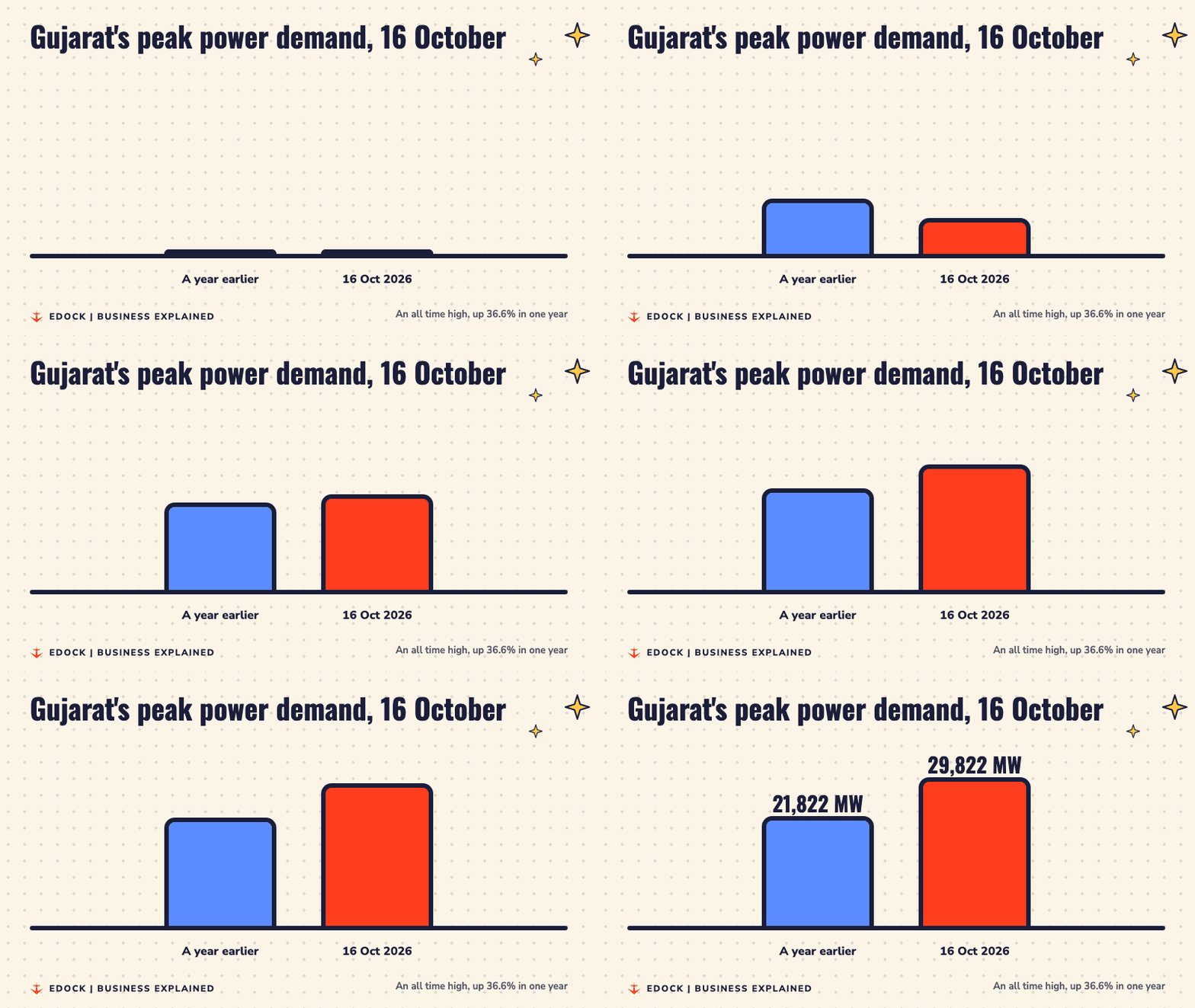
On 16 October, Gujarat hit an all time high peak demand of 29,822 MW. A year earlier, it was 21,822 MW. That is 8,000 MW more, a rise of 36.6%. Daily use went up 27% to 574 million units.
Farms alone needed around 12,000 MW a day, as per the state government. The state also pointed to hot weather, festive season factory work and lower hydropower and wind output.
How a coal crunch reaches a factory
Industries in parts of Gujarat were advised to avoid using electricity between 5 pm and 11 pm. That is the window when solar power drops to zero but demand from factories and farms stays high. The advice is voluntary, and it does not apply to companies whose machines must run nonstop. Different districts face the cuts in turns, week by week.
In Morbi, a ceramic making hub, industrialists said these staggered cuts will hurt the smaller MSME units there. MSME means micro, small and medium enterprises: small workshops and factories, like a neighbourhood samosa stall compared with a big restaurant chain.
Other states show what power cuts do to production. In Chhattisgarh, small steel mills have faced outages of 10 to 12 hours a day, forcing them to make less, their industry group said. If power goes while hot metal is in the furnace, the metal can harden and must be melted again. In Ludhiana, a steel wire maker said power cuts pushed his factory onto costly backup generators, raising energy bills.
Big companies that make their own power from coal are squeezed too. Coal India is sending coal first to plants that feed the grid. So these firms buy coal at auctions, where the average extra price over the base rate jumped to 94% in September from 59% in August.
From mine to machine
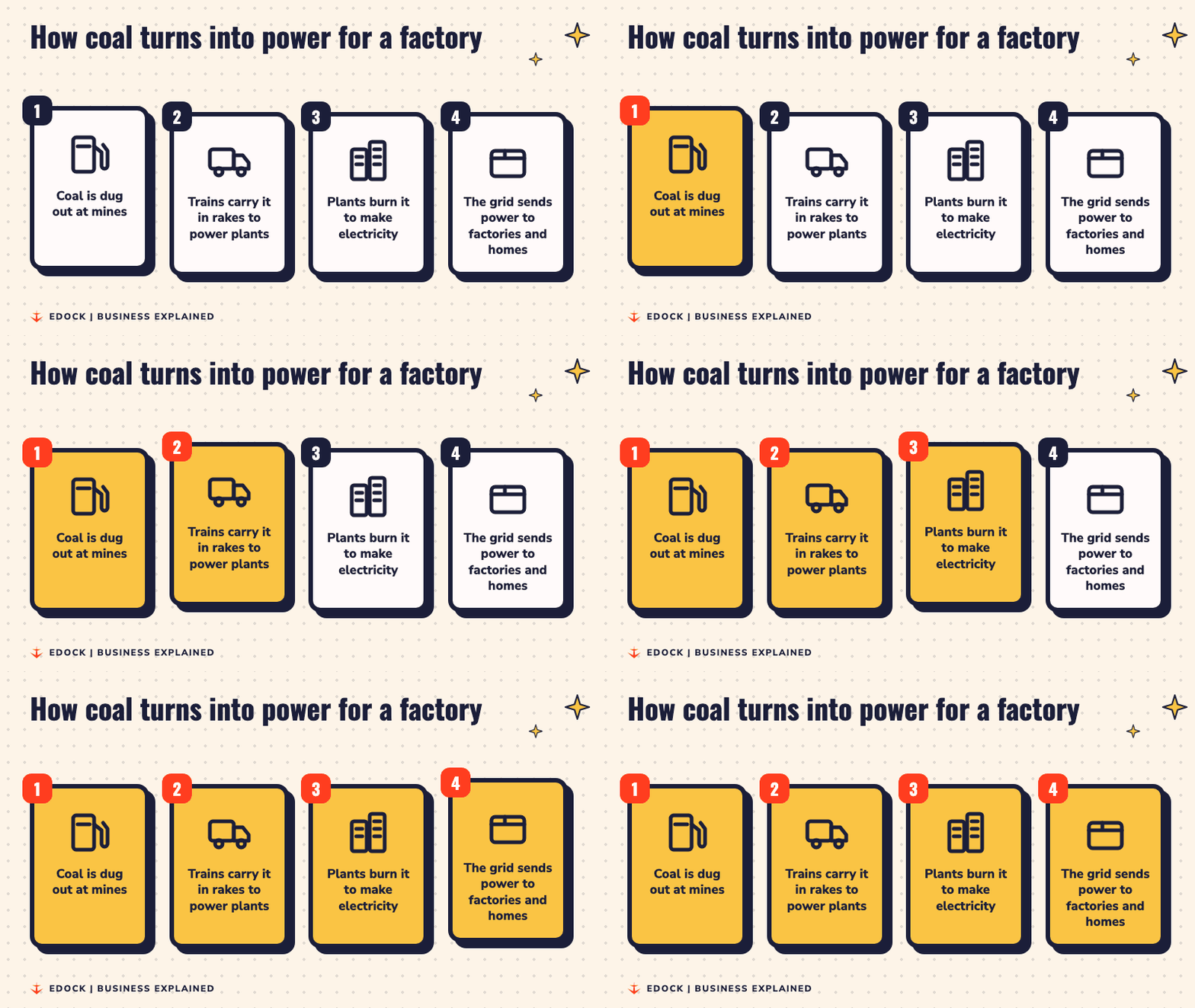
Coal does not teleport. It is dug out, loaded on trains, carried to plants, burned, and only then sent through wires to factories. A delay at any step shows up as a shrinking pile.
A "rake" is one full goods train. The coal ministry says railway loading has averaged more than 465 rakes a day in October. For Gujarat, the Union Coal Ministry has promised 10 to 11 rakes a day until November and 13 to 14 a day after that, the state said. Gujarat has also lined up short term power purchases of 2,990 MW for October.
Why not just save the extra solar power?
Because that needs giant batteries, and India does not have many yet. India has only 8.6 GWh of battery storage, while the CEA projects a need of 236 GWh by 2032, Mint reports. Gujarat itself has 192 MW of battery storage running, with more contracted.
Batteries would work like a water tank on a roof: fill it in the afternoon when solar is plenty, use it in the evening. Until more of those tanks are built, the evening rush will keep landing on coal.
Sources
- India's power crunch deepens as 96 coal plants face fuel shortages, The Economic Times
- Industries in Gujarat start curtailing power use, BusinessLine
- India's coal capacity plans face a major rethink as power demand soars, The Economic Times
- Blackouts hit Indian factories as coal crunch feeds into economy, The Economic Times
- Coal ministry says fuel supply to power plants up in October, The Economic Times
- India's solar boom and grid challenges, Mint
- Cover photos: Haryana Thermal Power Plant India 2012, by Vikramdeep Sidhu, CC BY 2.0; Coal train in Dhanbad, by Smeet Chowdhury, CC BY 2.0; Mount Tom Power Plant coal reserves, by Massachusetts Department of Environmental Protection, public domain


